




The difference between organic coffee vs non organic coffee comes down to what the organic label means. And what it doesn’t.
You pay extra for organic because you believe it means cleaner coffee. That belief is only half right.
The catch?

The organic label tells you how coffee was farmed. However, it says nothing about mould, which can grow long after the farm.
So is organic coffee really cleaner than non-organic coffee?
First, here’s who we are. We sell coffee, and an independent lab tested a sample of ours.
We ran a customer survey in September 2026, with 184 replies. In particular, 46% of them said mould and pesticide worries mattered most before they found us.
Short answer: Organic coffee is grown without synthetic pesticides or fertilisers, and an approved body inspects the farm. In contrast, non-organic coffee may use them, but neither label means the roasted beans were tested for mould. Only a lab test of the finished coffee tells you what’s in it.
So why can’t a label promise more than that? It comes down to what each label actually checks.
What Is the Difference Between Organic and Non-Organic Coffee?
Organic coffee is grown without man-made fertilisers or pesticides, and non-organic coffee may use them. That is the main difference between organic coffee vs non organic coffee. Organic rules cover the chain from farm to shop, but none require a mould test of the beans.
As a result, organic coffee can still carry mould. That said, most coffee is non-organic, and it is legal and safe to drink.

Organic coffee:
- How it’s farmed: Without synthetic fertilisers or pesticides.
- Who checks it: An approved body inspects the farm and the businesses that prepare, store or sell it.
- What gets tested: How the coffee is grown and handled. No rule requires a mould test of the roasted beans.
- Price: Usually higher, because the certificate costs money.
- Taste: Depends on the bean, roast and freshness, not on organic coffee vs regular coffee.
Non-organic coffee:
- How it’s farmed: Farmers may use synthetic fertilisers and pesticides.
- Who checks it: No organic inspection. Legal limits still apply to all coffee.
- What gets tested: Testing the roasted beans for mould is up to the brand.
- Price: Usually lower.
- Taste: Also depends on the bean, roast and freshness.
So organic is a promise about how coffee is produced. But who decides what can be called organic?
What Does “Organic” Actually Mean in the UK?
“Organic” is a legally protected word on food, and selling food as organic without a certificate is illegal. Only food certified by an approved control body can be sold as organic. As a result, every certified pack in Great Britain must show a code like GB-ORG-XX.
Look for the code, not just the word. It is the easiest way to tell organic vs conventional coffee apart.

The code turns organic coffee vs non organic coffee into a legal difference, not a marketing one.
A farm can’t become certified organic overnight. Instead, the land must first follow the rules for a set time.
Coffee sources such as Cafe Imports say this takes at least three years. Because of that wait, certified organic coffee often costs more.
So years of rules should buy you a cleaner cup, right? Surely pesticides are the first thing to go.
Is Organic Coffee Pesticide Free?
Not completely, because organic rules ban man-made pesticides but still allow a list of approved sprays. So pesticide residues on organic coffee should be lower, but lower isn’t the same as zero. Spray from a farm next door can also drift onto an organic crop on the wind.

In other words, the rules limit what farmers can spray. They don’t ban spraying altogether.
So, is organic coffee pesticide free? The word “free” goes too far. The label only promises a crop grown without man-made pesticides.
On pesticides, organic coffee vs non organic coffee really does differ, just less than you’d think.
Pesticides are one worry. However, a quieter one can grow after the coffee leaves the farm.
Does Organic Coffee Have Mould?
It can, because organic rules set no mould or mycotoxin test for the roasted beans. Most mould grows later, when beans are dried, stored or shipped in damp conditions. In Great Britain, organic and non-organic coffee share one legal limit for ochratoxin A, a mould toxin.
So, does organic coffee have mold? Yes. Organic inspectors check how coffee is handled and stored, but they don’t test the beans for mould.

Great Britain’s law sets that limit at 5 micrograms per kilo for roasted coffee. For instant coffee, it is 10.
By contrast, the EU has had lower limits for ochratoxin A since 2023. They are 3 micrograms per kilo for roasted coffee and 5 for instant.
In the organic coffee vs non organic coffee debate, the label makes no difference to mould.
And here is the part most people miss.
A legal limit is a ceiling. However, it doesn’t prove every bag was tested against it. Only a lab test of the finished beans can tell you that.
That’s why we sent a sample of our beans and ground coffee to an independent lab. No mould, mycotoxins or heavy metals were detected.
We sent the sample ourselves. Therefore, the results apply only to that sample. You can read our independent lab results in full.
To learn whether roasting kills mould, read our guide to mould in coffee.
Mould aside, many people choose organic for their health. But is it actually better for you?
Is Organic Coffee Healthier Than Regular Coffee?
The evidence is mixed, so there’s no clear proof that organic coffee is healthier to drink. Two studies from Warsaw University of Life Sciences found differences in both directions. Roasting and brewing also changed the results, so the organic label alone tells you very little.
But is organic coffee healthier? It’s a fair question, because we tend to assume organic means better.
Consider the numbers.

A 2020 study tested both kinds of coffee. Organic coffee had more antioxidant activity and more chlorogenic acid. However, conventional coffee had more caffeine.
In a 2025 study, the same group compared organic coffee vs non organic coffee again. However, this time the results were mixed.
Conventional beans had more chlorogenic acid and stronger antioxidant activity. In contrast, coffee brewed from organic beans had more polyphenols. The caffeine gap between the beans was too small to count.
Polyphenols and chlorogenic acid are both antioxidants. These are natural compounds found in plant foods, including coffee.
Your brewing method matters as well. For example, a 1991 study found a paper filter traps an oil that raises cholesterol.
In addition, how much you drink matters. EFSA says up to 400mg of caffeine a day is safe for most healthy adults.
Finally, for specific health conditions, see whether organic coffee is good for you.
Health is one reason people pay more for organic. But does it also make a better cup?
Does Organic Coffee Taste Better?
Not because of the label, as we found no evidence that organic certification changes taste. Flavour comes from the bean, the farm, the processing and the roast. A non-organic coffee can taste wonderful too, because of where it was grown and how it was brewed.

It’s natural to assume the answer to does organic coffee taste better is yes. After all, it’s grown with care.
However, speciality and commercial coffee can both taste exceptional, or stale and harsh. Even the same coffee tastes different with a new roast or brew method.
Taste is one area where organic coffee vs non organic coffee makes little difference.
So what does that mean for you?
If flavour comes first, check the roast date, the origin and how the coffee was processed. In addition, follow the brewing method on the bag.
So if the label doesn’t change the taste, who does it actually help?
Is Organic Better for Farmers and the Planet?
Often, yes, because organic farms avoid man-made chemicals, so farm workers handle fewer of them. The Soil Association, which campaigns for organic farming, links it with healthier soil and more wildlife. It says natural compost and the use of fewer pesticides help make that difference.

Some small farms grow coffee cleanly but can’t afford the organic label. That’s because organic certification can cost several hundred to several thousand US dollars, says Cafe Imports.
Farmer groups called co-operatives sometimes share the cost, which helps. Even so, not every farmer has access to one.
As a result, their coffee is sold as conventional, even when it’s grown cleanly.
So is the organic label worth the extra money for you?
Is Organic Coffee Worth It?
It depends on what worries you: how coffee was farmed, or what’s in your cup. Organic is worth the extra money if the way coffee is farmed matters most to you. However, it isn’t enough on its own if your main worry is mould or residues.

Worth paying extra if:
- You want fewer synthetic chemicals used on the farm.
- You want to support organic farmers and that way of farming.
Not enough on its own if:
- Your real worry is mould, mycotoxins or residues in your cup.
That’s because, in the organic coffee vs non organic coffee choice, both can carry mould.
So before you ask “is organic coffee worth it?”, ask a different question. Is organic coffee better for what you care about most?
If mould is your main worry, the organic label won’t answer it. Look for coffee brands that publish lab results instead.
Any brand selling organic coffee should be able to answer three simple questions.
Three questions to ask of any bag:
- Does it show a certifier code, like GB-ORG-XX?
- Does it name the farm or region?
- Is there a published lab test of the roasted coffee?
The third question is the one only a lab can answer. So what did our own lab test show?
Where Does Balance Coffee Fit In?
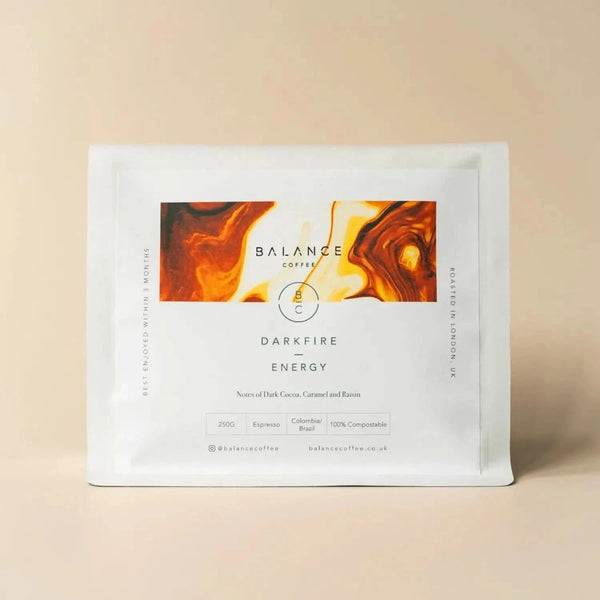
Balance Coffee is our coffee, and this site is ours too. Our lab test detected no mould, mycotoxins or heavy metals in our sample.
In 2026, P.H. s.r.l. of the TÜV SÜD Group tested a sample of our beans and ground coffee. The mycotoxins tested included ochratoxin A and aflatoxins B1, B2, G1 and G2.

In addition, the lab screened the sample for over 600 pesticides.
These results apply only to the sample we sent, because we sent it ourselves.
Our results don’t settle the organic coffee vs non organic coffee question. Instead, they answer a different one: what’s in the cup.
To see what we check and why, read how we test our coffee.
Finally, if you’d like to taste it, browse our mould free coffee.
Still have questions about the organic label? Caffeine, acidity and decaf come up most.
FAQs
Does organic coffee have more caffeine?
No, studies show no consistent difference, and a 2020 study even found more caffeine in conventional coffee. A 2025 study by the same group found no meaningful difference between the beans. Caffeine depends mostly on the bean type, Arabica or Robusta, and how much coffee you use.
Is organic coffee less acidic?
There’s no good evidence that organic coffee is less acidic than non-organic coffee. Roast level and origin usually shape how acidic or bright a coffee tastes in the cup. If your coffee tastes sharp, check where it was grown and how dark it was roasted.
How can you tell if coffee is really organic?
Look for the certifier code, which in Great Britain looks like GB-ORG-XX and is often printed small. The code points to the approved control body that inspected and certified the coffee. If a bag says organic but shows no code, the word alone proves nothing.
Is non-organic coffee bad for you?
No, because non-organic coffee must meet the same legal limits as any other coffee in Great Britain. For more certainty, look for a published lab test of the roasted coffee. It shows the measured mould toxins and residues, so you can check the numbers yourself.
Is organic decaf chemical free?
Certified organic decaf can’t use chemical solvents such as dichloromethane or ethyl acetate. GB organic rules only allow listed processing aids, which include water and carbon dioxide. So organic decaf is usually made with water or carbon dioxide, and the pack can tell you which.
So what should you take away from all of this?
Conclusion
By now, you know how organic coffee vs non organic coffee differ.
Organic tells you how coffee was farmed. A lab test tells you what’s in it.
You want both answers. That’s because a clean farm can’t undo mould that grows in a damp warehouse.
Therefore, next time you shop, check for the certifier code. Then look for the farm or region, and ask about mould testing.
When you’re ready to buy, read our guide to the best organic coffee beans in the UK.
