







The real organic coffee benefits are fewer pesticide residues, safer farm work, healthier soil and solvent-free decaf.
That list is shorter than most websites claim. However, it is also more honest.
You may have read that organic coffee gives you more energy, more vitamins or a better taste.
The problem?

The evidence for those claims is weak or missing. Therefore, this guide sticks to what research can show.
We sell coffee, so we have a stake in this topic. Because of that, every claim below links to its source.
Short answer: Organic coffee is grown without man-made pesticides or fertilisers, so it tends to carry fewer residues. In addition, it protects farm workers, supports wildlife and keeps solvents out of decaf. That said, it does not add caffeine, vitamins or flavour.
James has worked in coffee for over 14 years and holds the SCA Coffee Skills Diploma. He has worked with more than 100 roasters and founded Balance Coffee in London.
With that experience in mind, let's answer the big question. What does the organic label actually change?
What Are the Benefits of Organic Coffee?
Two of the main organic coffee benefits are for you: fewer residues and solvent-free decaf. The other two help farmers and wildlife. Each one comes from how the coffee is farmed and processed.
Here are the four in brief:
- For you: fewer pesticide residues. Organic crops carry residues far less often, because man-made sprays are banned.
- For you: solvent-free decaf. Certified organic decaf can't use chemical solvents. Instead, it uses water or carbon dioxide.
- For farmers: safer work. Workers on organic farms handle fewer harmful chemicals.
- For the planet: more wildlife. Organic farms have more kinds of plants and animals, on average.
Which benefit matters most depends on you. Even so, the crop itself is a good place to start. Does organic mean fewer sprays in your cup?
Does Organic Coffee Have Fewer Pesticides?
Yes, organic coffee should carry fewer pesticide residues, because its rules ban man-made pesticides. However, the rules still allow a short list of approved sprays. That makes fewer residues a fair promise, but not zero residues.
The strongest evidence comes from a 2014 review of 343 studies.
It found residues four times more often on non-organic crops than on organic ones. That said, the review covered crops in general, not coffee alone.
Now the caveat.
In Great Britain, "organic" is a legally protected word on food. Even so, the label tells you how coffee was grown, not what a lab found.
Fewer sprays matter for your cup. But what about the people who do the spraying?
Does Choosing Organic Help Farmers?
Yes, because organic farms don't use man-made pesticides, workers handle fewer harmful chemicals. For many farm workers, this is among the most important organic coffee benefits.
Consider the scale.

A 2020 review estimated about 385 million cases of accidental pesticide poisoning each year. That is about 44% of the world's farmers.
Organic farming takes many of those chemicals off the farm. Therefore, workers on these farms face less exposure.
The trade-off?
However, small farms often can't pay for a certificate, even when they farm with care. As a result, some well-grown coffee still sells without the label.
Our own sourcing is a separate point from the organic label. We buy beans from the top 5% of farms worldwide. In addition, we pay 25% above market rate.
Farm workers are not the only ones who gain. But does the land around them gain too?
Is Organic Coffee Better for the Planet?
Often, yes, because organic farms tend to have more wildlife than other farms. Their rules ban man-made fertilisers and pesticides. Instead, farmers feed their soil with compost and manure.
A 2014 review looked at many studies of farms. On average, organic farms had about 30% more kinds of plants and animals.
There is a limit to that.
The review covered farms in general, not coffee alone. Even so, it is good evidence that organic coffee benefits wildlife on the farm.
The Soil Association says organic farming also helps the soil. However, it is an organic charity and certifier, so it is not neutral.
Farming is one part of the story. But what changes when the coffee is made into decaf?
Is Organic Decaf Made Without Solvents?
Yes. Decaf with an organic certificate must skip chemical solvents. Instead, the caffeine comes out with water or carbon dioxide, which GB organic rules allow.
However, decaf is not fully caffeine-free. It keeps a small amount, so check the label if you avoid caffeine.
Those are the benefits we can stand behind. But what about the health claims you see everywhere?
Does Organic Coffee Provide More Health Benefits?
Not clearly, because no strong evidence shows organic coffee is healthier to drink than other coffee. Any health effects linked with coffee come from the coffee itself, organic or not.
Of all the organic coffee benefits, better health is the hardest to prove. For you, the main gain is fewer pesticide residues on the crop, not a proven health boost.
Most coffee and health research watches people over time. As a result, it shows links, not proof. In addition, it rarely separates organic from non-organic coffee.
What about antioxidants?
Studies disagree on whether it has more. A 2020 study found more in organic coffee, but a 2025 study found more in non-organic beans.
For heart, liver and kidney questions, read whether organic coffee is good for you.
In short, some popular claims don't hold up. Which ones should you stop believing?
What Can't Organic Coffee Promise?
Organic coffee can't promise more energy, better taste or a mould-free bag. Some claimed organic coffee benefits are common online. However, the label covers none of these, as our guide to organic vs non-organic coffee explains.
Worth being blunt here.
- More energy: Energy comes from caffeine, and the label doesn't add caffeine to a bean.
- Better taste: Taste depends on origin, variety, processing, roast and freshness, not on the label.
- No mould: Organic rules don't require a mould test of the roasted beans. In addition, mould can make mycotoxins, which are natural toxins.
- Extra vitamins: We found no good evidence that organic coffee holds more vitamins or minerals.
In particular, mould is a big worry for our own customers. Nearly half of the 184 who answered our September 2026 survey put mould and pesticides first.
That gap is why we test our own coffee. What did our latest lab test find?
How Does Balance Coffee Check Its Coffee?
We had our coffee sampled and tested by an outside lab, because a label can't show what's inside. Mould, mycotoxins and heavy metals were all below detectable limits.
Our 2026 test was run by P.H. s.r.l., part of the TÜV SÜD Group. In addition, its pesticide screen covered over 600 compounds.
We sent the sample ourselves. Therefore, the results cover that sample only. You can read our independent lab results in full.

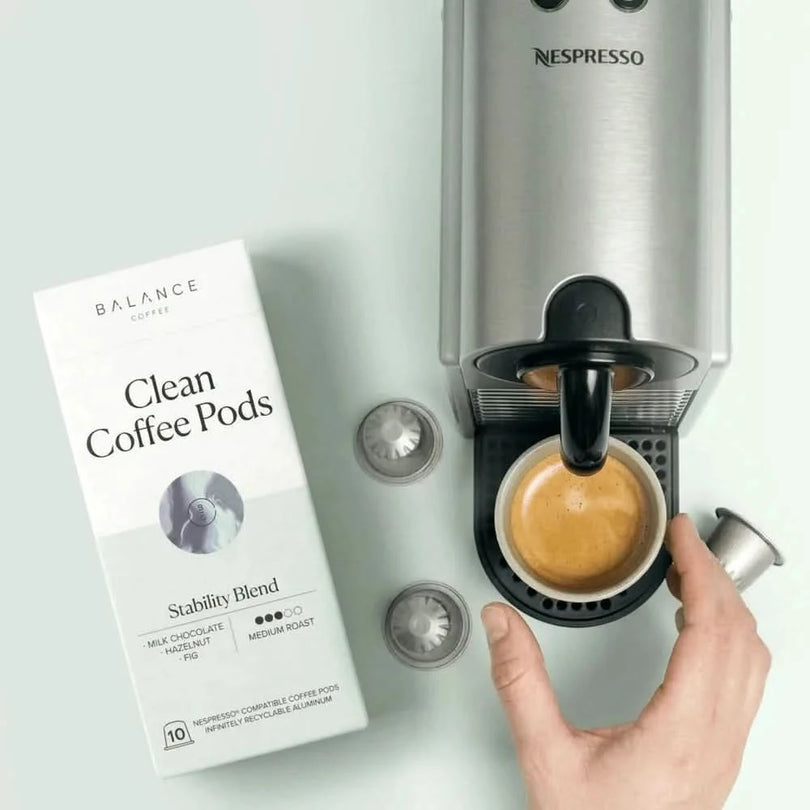
If you'd like to try our coffee, start with Stability Blend.
We once asked double Olympian Tom Bosworth why he chose our Level Up Blend.
Tom told us: "It helps me prepare for my daily exercise, and I absolutely love the Level Up Blend most."

Still have questions about organic coffee benefits? Does it give you more energy, for a start?
FAQs
Does organic coffee give you more energy?
No, organic coffee doesn't give you more energy, because energy comes from caffeine. The label doesn't add caffeine to a bean. For example, one 2020 study measured more caffeine in the non-organic samples it tested. Your energy depends on the bean type, your dose and your brew.
Is Fairtrade coffee the same as organic coffee?
No, because Fairtrade sets a minimum price for farmers, while organic sets farming rules. Fairtrade bans over 200 highly hazardous pesticides but neither requires nor forbids organic farming. As a result, one bag can carry both labels. Fairtrade even pays a higher minimum price for organic coffee.
Why is organic coffee more expensive?
Organic coffee costs more because certification takes time and money. Farms must follow organic rules for years before they qualify. In addition, the certificate can cost hundreds to thousands of US dollars, says Cafe Imports. As a result, some small farms sell their coffee as conventional.
Is speciality coffee the same as organic coffee?
No, speciality is a taste grade of 80 points or more on the Specialty Coffee Association's scale. In contrast, organic is a farming standard, checked by an approved body. A coffee can be one, both or neither. Read how speciality coffee is graded to learn more.
Does organic coffee have side effects?
Yes, the same side effects as any other coffee, because they come from caffeine, not farming. Too much caffeine can disturb your sleep and make you feel anxious, says EFSA. Therefore, the organic label won't make coffee gentler on you. If coffee keeps you awake, decaf is the simpler fix.
How much organic coffee can you drink a day?
The same as any other coffee, because caffeine limits don't change with the label. For most healthy adults, EFSA puts the safe daily limit at 400mg of caffeine. However, if you're pregnant, the NHS advises 200mg a day at most. Tea, cola and chocolate add caffeine too.
Is organic coffee worth choosing, then?
Conclusion
The real organic coffee benefits make it worth choosing if farming methods matter to you.
You get fewer pesticide residues, safer farm work, healthier land and solvent-free decaf. However, you don't get extra energy, extra vitamins or a better taste.
The label also can't promise a mould-free bag. Therefore, if what's in your cup matters most, look for a published lab test too.
Ready to compare brands? Read our guide to the best organic coffee beans in the UK.
