




Have you ever looked at your morning coffee and wondered whether it's really ethical coffee you're drinking?
Where did it come from? How did it arrive, and what does the coffee chain really look like?
Did the farmer receive a fair price for the beans? Were they grown in a sustainable environment?
I certainly have, so today we wanted to talk to you about ethical coffee.
It's tricky but there's something we can all do to ensure that the coffee we drink is sustainably sourced.
What is Ethical Coffee?
The first difficulty with ethically-sourced coffee is that there isn't a commonly agreed-upon definition.
Generally speaking, we define 'ethical coffee' as coffee bought directly from farmers at a fair price.
By fair, I mean a price that covers production costs.
It includes a healthy margin for the farmer, which is always at least 20% above the cost of production.
(To learn more about how much coffee farmers are actually paid, read this.) Ethical coffee is grown in ways that respect the environment for future generations and promote biodiversity.
This may include coffee grown organically.
Although I recognise that not all coffee producers will be able to afford organic certification.
Certifications
There are many different certifications surrounding ethical and sustainable coffee. However, many of them are not quite as incredible as they first appear.
3. Fairtrade
We're sure you've heard of Fairtrade. This is the most well-known coffee certification, but that does not necessarily mean that it is the best.
One of the requirements of Fairtrade is that a minimum price per pound of coffee must be paid to the farmer.
While this means the farmers might be paid more than they would outside Fairtrade, it still doesn't guarantee they are paid a good wage.
In fact, many see Fairtrade as having created a price ceiling rather than a price floor, as coffee roasters and importers have begun to shy away from Fairtrade coffee.
 Fairtrade logo
This is because Fairtrade does not guarantee that the coffee is high-quality.
Coffee farmers now often sell their lower-quality beans as Fairtrade (as they will get a better price than they normally would) and sell their higher-grade coffees on the open market, where they will receive a higher premium for their quality. Additionally, land ownership is a requirement for participation in the Fairtrade cooperatives.
Many farmers do not own their own land and instead work for larger plantations.
These farmers therefore see little of the profit that comes from the higher price of Fairtrade coffee.
For more information, we would recommend reading this article, which explains more of the problems with Fairtrade.
2. Rainforest Alliance
Rainforest Alliance is another certification, although it focuses more on environmentally sustainable coffee than on socially ethical coffee.
Its mission is to conserve biodiversity by promoting sustainability, and they specifically focus on reducing deforestation and the destruction of ecosystems.
However, the Rainforest Alliance is quite a loose standard.
 Rainforest Alliance logo
Significantly, Rainforest Alliance does not guarantee a minimum price to suppliers.
Furthermore, they have been criticised for certifying products with very low levels of certified content.
(I.e. only 30% of the coffee in a bag needs to be certified Rainforest Alliance for the whole bag to be labelled as such.)
You can avoid this issue by looking for labels that say 100% Rainforest Alliance certified, but this isn't always easy to spot.
3. UTZ
This is a slightly lesser-known certification focused on agriculture, specifically habitat preservation, water use, pesticide use, and soil erosion prevention.
However, as it is part of the Rainforest Alliance, UTZ has also been criticised for being too general.
Furthermore, it does not require the use of shade trees, which has a significant impact on biodiversity conservation.
Organic Coffee
There are other key terms used in the coffee industry beyond Fairtrade and other certifications.
The most commonly used (and the most commonly misunderstood!) term is 'organic'.
Firstly, it is important to realise that there is no single, international set of standards for organic coffee.
Instead, coffee farms must go through accredited agencies to be certified as organic, which can differ from country to country.
Unfortunately, this is not the only problem with organic coffee. To be certified as organic is extremely expensive, and involves ongoing inspections which are huge costs for producers.
This effectively puts organic certification out of reach for most small-scale farmers unless they are part of a cooperative.
However, this isn't the only bar to entry. It can also be time-consuming for a farm to be certified as organic.
The farm must undergo “conversion,” three years without using synthetic pesticides or fertilisers, before it can be certified.
Organic isn't the only big buzzword in the coffee industry.
Direct Trade
There's also direct trade, which basically means that the coffee roaster or importer has a personal relationship with the farmer - they don't go through a middleman.
This implies that the farmer will get a higher price for their coffee. However, the term direct trade is legally meaningless.
Any coffee roaster can claim that their coffee is sourced via direct trade without providing evidence that this is true, or that the farmer is getting a better deal.
This is not to say that direct trade is a bad thing - you need to ensure that the coffee roasters are actually doing everything that they say.
Do the roasters visit farmers and provide education, equipment and other support?
Look at the information they provide about farming practices, worker provisions, whether cherries are picked by hand, and whether native trees remain to provide shade.
We're always striving towards this level of transparency, as you can see in the descriptions of our speciality coffees.
We've also got lots of information about our sustainability practices, which you can check out too!
What to look for and where to find Ethical Coffee UK
If you’re going to buy ethical coffee beans at a coffee shop, we always recommend going to local independent businesses rather than large chains.
Small, independent coffee shops are more likely to have direct relationships with coffee roasteries and coffee farms.
They're also more likely to answer any of your questions about where they source their beans.
Furthermore, we always recommend paying that little bit extra for a cup of coffee. Cheap coffee is more likely to be low quality, and reflect unfair prices paid to the farmer.
In terms of buying your own coffee beans online, we recommend buying the best coffee beans in the uk, from ethical coffee companies that are transparent about their ethical sourcing policies.
Look on the coffee company's website - do they have a dedicated page where they discuss their sustainable and ethical policies?
Transparent Information and Packaging
Do they recognise that Fairtrade isn't the best definition of ethical coffee?
Make sure that you look beyond certifications and logos.
Much like smaller coffee shops, smaller coffee roasteries are more likely to be involved with their supply chains and the farms their beans come from, and they’ll usually be able to answer questions about the farms they work with.
An easy way to find this information is by looking at the roastery's packaging and website.
For example, all of our coffee descriptions include transparent information about the specific farm, the altitude where the coffee is grown, and the region, among other details.
Ethical Coffee Subscriptions
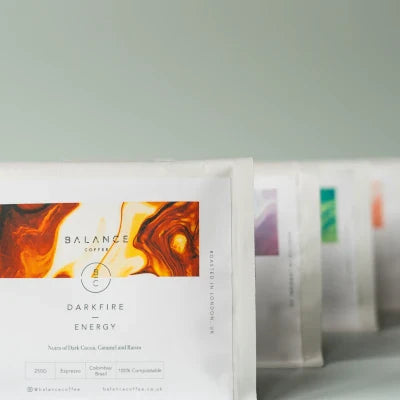
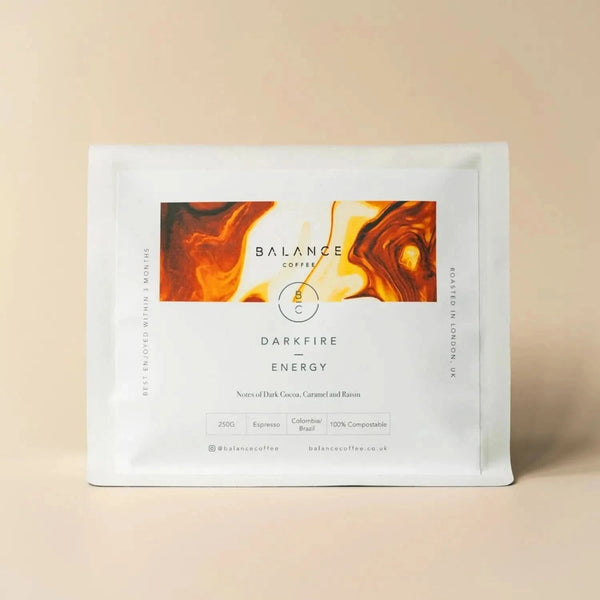
The topic of coffee subscriptions is a great one—we at Balance Coffee pride ourselves on sourcing some of the world's best coffee beans.
Big statement? We'll leave that up to you to decide...
We source coffee from small farms and cooperatives and pay 25% more for our raw coffee before roasting.
For us this guarantees we're supplying ethical coffee in the UK and operating as an ethical coffee company too.
There are also many other coffee roasters out there who operate sustainably and ethically, so the choice is yours, as long as you carry out your research.
Conclusion:
Of course, this is just the beginning. There's so much more that we can all do to ensure that the coffee we drink is ethically and sustainably sourced.
For now, we recommend:
- Reviewing your coffee roaster/shop of choice
- Checking how they support farmers and promote ethical practices
- Paying a higher price for sustainable, high-quality speciality coffee
- Looking beyond certifications and buzzwords
- Asking questions!
Enjoy this article? Sign up to our Balance Coffee Club newsletter below for monthly recipes, tips and hacks that’ll improve your coffee game!