





 Excellent |


So, Kopi luwak coffee, what about it? The food world is very interesting, to say the least. Trends can come and go quickly, but some trends also stick around since:
- They're just THAT intriguing, and
- Enough people have accepted the trend.
One such food trend is kopi luwak coffee, which seems to have taken the world by storm.
But what is kopi luwak?
I'll answer that question (and everything else related to it) in this article. So, keep reading!
What Is Kopi Luwak?
First things first: What is kopi luwak?
Kopi luwak is traditionally an Indonesian coffee, but it has also spread to other Southeast Asian countries with similar ecosystems and climates.
"Kopi" is the Bahasa Indonesian word for "coffee," while "luwak" is what the Asian palm civet is called in Sumatra.
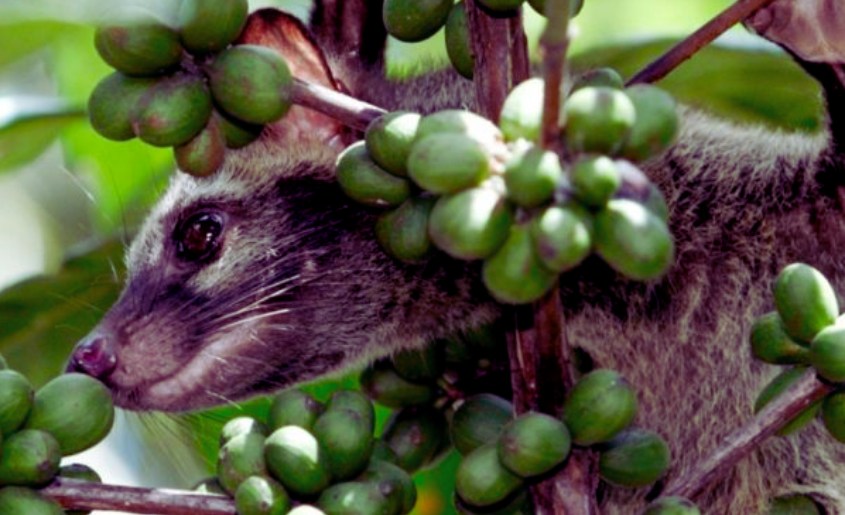
Kopi Luwak is also called civet coffee in the West. It's a kind of drink made from coffee beans excreted whole by a civet cat. In simpler words, it's cat poop coffee. Despite the name, civet cats are actually not cats.
Civet coffee is more concerned with the process than the kind of coffee cherries a civet eats.
There are also different kinds of civet coffee, and the coffee depends on the cherries fed to the civet.
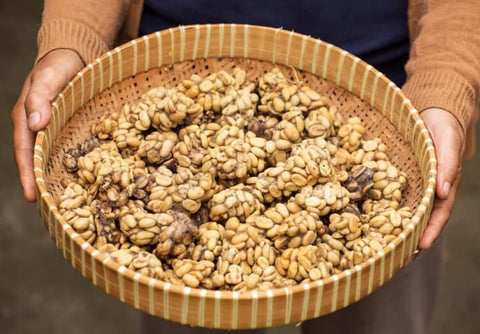
Among all those different kinds, Arabica coffee from the excreted Arabica beans seems to be the most popular flavour.
I have also written a few in-depth articles, which you should read below.
- Types of Coffee: Choose the right coffee beans for you
- Arabica vs Robusta coffee everything you need to know!
What Is So Special About Kopi Luwak/Civet Coffee?
The main thing that makes this drink so special is its uncommon production method.
For one, the civet cats are fed only the ripest coffee cherries, which makes the best coffee.
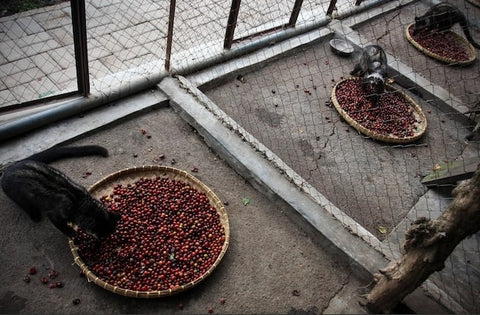
After that, you'll need to wait for the beans to be pooped out before they're cleaned and roasted, so they're ready for people to consume.
Aside from that, there's something about a civet's digestive tract that changes the chemical composition and taste of a coffee bean.
What Does Kopi Luwak Taste Like?
You'll be happy to know that civet coffee tastes nothing like poop.
Instead, it has a unique taste and consistency that makes it stand out among other kinds of coffee in coffee cupping events.
Perhaps the most obvious difference you'll notice with kopi luwak is it gives you a smoother cup of coffee.
Avid coffee drinkers also appreciate that you don't get the high-acidity aftertaste common in cheaper coffees. That can also mean there's less caffeine.
But if you prefer coffee without caffeine in it, our Halcyon decaf coffee beans are worth a try.
The bitterness is scientifically proven to disappear thanks to the digestive enzymes in civets, which break down protein molecules that would otherwise make coffee bitter.
In terms of flavour profiles, it's historically believed that civet coffee beans are more flavourful than handpicked coffee beans.
Generally, the flavour of your cup of civet coffee largely depends on the civet cat's diet and what coffee bean they're fed.
Some examples of flavours you can expect with kopi luwak are:
- Rich earthy notes
- Citrus
- Chocolate
- Floral
- Syrupy
- Jungle undertones
However, everyday coffee drinkers might not be able to catch these "jungle undertones."
All in all, kopi luwak is easy to drink, even for those who have difficulty with the high acidity of regular coffee beans.
How Is Kopi Luwak Coffee Made?
Traditionally, people just hunted down the droppings of wild civets.
But as the demand for kopi luwak grew, people began explicitly raising those civets in cages, in local forests, or on plantations.
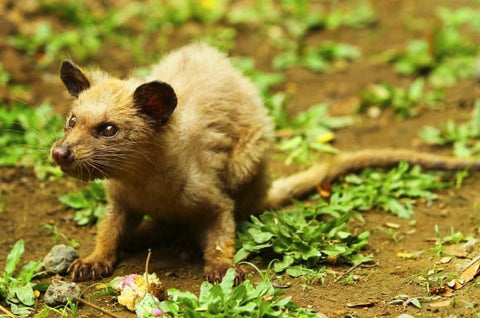
In general, here's the kopi luwak production process:
- Native farmers will grow the coffee plants.
- Ripe coffee cherries from the plants are fed to the civet cats.
- Within 24 to 36 hours, the gastric juices from the civet's digestive system will change the taste and chemical composition of the coffee beans.
- After the digestion process, the civet will poop, which will include the partially-digested coffee beans.
- The coffee beans are handpicked from the poop.
- The beans are processed, which includes being washed, dried, and roasted.
- The kopi luwak beans are packaged and sold.
Why Did People Start Drinking Cat Poop Coffee?
Let's learn why people began drinking cat poop coffee.
This coffee is made from civet droppings. Kopi luwak's history dates back to the early 1600s.

Image source: AZ Animals
Back then, the Dutch invaded Indonesia and discovered coffee.
The Dutch then began sending coffee back to Europe. Sadly, the demand for coffee in the West began to grow a lot.
The Dutch struggled to keep up with this high demand.
Recommended For You: Best decaf coffee beans brands UK
That's because a war broke out between two groups in Indonesia.
This war lasted 34 years. The Dutch were asked to help.
Besides that war, another war lasted only five years. This war was between the Javanese and the Dutch.
The Dutch won both wars. But winning drained their resources a lot.
To recoup their losses, they imposed the Cultivation System.
This system told the Javanese people:
- What products to grow
- How to grow them
- Who would grow them
- How long should they work
One of the important rules of this system was that people couldn't keep some products, including coffee, for themselves.
No one knows who first thought to check if civet poop had usable coffee beans.
What is known is that the Javanese started harvesting coffee beans this way during the Cultuurstelsel.
The upper classes eventually heard about this interesting bean, which was of great quality.
As a result, the kopi luwak beans began to grow in popularity.
However, it wasn't until the 1990s that kopi luwak became known internationally.
Why Is Kopi Luwak Coffee So Expensive?
The two main reasons kopi luwak is an expensive coffee are its high demand and the time and effort required for its production.
I don't recommend starting your coffee journey with it. If anything, I would suggest you read my blog on the best coffee beans for beginners, especially if you live in the UK.
This is because you want something affordable to help you decide whether to continue or discontinue.
Small Supply
Estimates vary, but kopi luwak production is thought to range from around 50 tons to 500 tons a year, depending on how much caged farming has scaled up the supply.
Even at the higher end, that's nothing when you find out that there are about 10.7 million tons of coffee produced each year worldwide.
There's also high demand for kopi luwak worldwide. Various industry reports estimate the niche market to be worth billions of dollars and growing, though exact figures vary widely between sources, given how opaque and fragmented this corner of the coffee industry is.
Kopi Luwak Production
So much time and effort are needed to produce kopi luwak.
For one, civet cats are naturally choosy about the coffee berries they eat, so they're only fed the ripest cherries.
Aside from that, it takes at least a day for a civet to poop out the beans.
Of course, there's also the job of gathering the civet poop and picking the coffee beans out of them, which is both disgusting and quite labour-intensive.
How Much Does a Cup of Kopi Luwak Cost?
Kopi luwak is one of the most expensive coffees you can buy.
One cup of this speciality coffee can cost anywhere between $30 to $100.
If you're buying by the pound, prices range from around $45 for farmed beans up to $590 for rarer wild-collected beans.
The more expensive civet coffee bags usually come from wild civets rather than caged ones.
After all, looking for the droppings of wild civets is more time-consuming and labour-intensive than just visiting civet cats in cages.
The Controversial Production of Kopi Luwak Coffee Beans
There are several problems concerning kopi luwak.
First of all, the bag of kopi luwak coffee you have is most likely from caged civets. After all, finding free-range civets isn't good for a business's time, money, or labour.
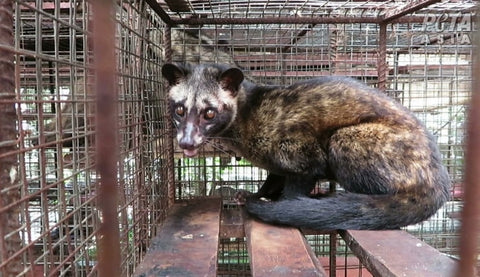
The problem is that coffee plantations that source Asian palm civets from the wild typically don't meet animal welfare standards. Below are a few reasons for that:
- Civet cats are solitary and territorial. Unfortunately, they're taken from their natural habitat and are normally crammed into small spaces, which leads to fights and the easy spread of illnesses. They also don't have the opportunity to interact with other wild animals on their own.
- The raised civet cats are sometimes kept in metal cages to make harvesting their poop easier. Aside from being uncomfortable, the metal wires can cause wounds and sores all over the civets' bodies.
- Civet cats are naturally shy and nocturnal, but many coffee plantations allow tourists to enter and view them during the day.
- Civet cats have a diverse diet of pulpy fruits, seeds, berries, and small insects. But to produce more beans (and get more profit), they're typically force-fed only coffee cherries. This can cause malnutrition and other health problems. This can mess with their digestive tract, leading to low-quality beans.
- As previously mentioned, civet cats can be choosy about the quality of the cherries they eat. When they are force-fed with cherries, they aren't able to choose the very best ones for themselves. This can also degrade the quality of the coffee beans.
- There's also concern that the wild civet population might decline due to people capturing them for farming.
Reading all that, you might be wondering: Maybe it's better to just look for civet poop in the wild, even if it's cost-, time-, and labour-intensive.
Sadly, it's not as easy as that.
That's because there's no way to tell if the wild animal poop is civet poop.
Another problem is the possibility of buying fake beans. As with fake designer bags and shoes, there are people who want to cash in on the popularity of civet coffee.
Some of these manufacturers try to mimic the processes that authentic kopi luwak undergoes in a civet cat's digestive tract. They do this by adding various chemicals to the cherries and beans.
Some sellers even just take your everyday traditionally fermented beans and advertise them as kopi luwak.
Frequently Asked Questions
This speciality coffee has really captured the interest of people around the world, both within and beyond the coffee industry.
Below, we've answered some frequent questions on the Asian palm civet coffee:
Is Kopi Luwak Clean?
Yes, kopi luwak is clean.
That's because the cleaning process is very intensive. After all, you're technically making something edible from poop, which increases the risk of faecal contamination.
The beans from civet poop are cleaned by being washed first. Then the outer shell is removed, and the beans are dried in the sun.
Once dried, farmers will rewash the beans to ensure no outer shells remain. Then, they are dried again. After that, the beans are roasted at 220° Celsius.
Is Kopi Luwak Coffee Safe to Drink?
Yes, kopi luwak coffee is safe to drink.
That's because the washing and roasting process ensures that no germs or bacteria will survive.
However, there's a risk of fungal growth in the droppings if you don't collect them within 24 hours.
That shouldn't be a problem with caged civet cats, but there's no sure way of knowing how long civet poop has been on the ground if you're gathering them in the wild.
How Can I Prepare Kopi Luwak Coffee?
One of the most common ways to serve it is as brewed coffee. It's easy enough if you have a coffee machine and a grinder too!
Here's how to brew good coffee:
- Pour hot water into the coffee pot to heat for a bit, then empty it out. Doing so ensures that the coffee you add later doesn't cool rapidly.
- Grind your coffee and put it in the coffee pot. (PRO TIP: A good rule of thumb is to put two tablespoons per cup of coffee when brewing)
- Let your coffee machine work its magic.
- Enjoy your cup of speciality coffee!
Are There Other Types of "Animal Poop Coffee"?
Yes, there are other kinds of animal poop coffee. Below are some examples:
Bat Coffee
Bat coffee is a type of Costa Rican coffee made from the fruit of the Artibeus jamaicensis.
Though people call it "bat poop coffee," it's actually not from the bats' droppings.
Instead, they come from coffee cherries that were nibbled by bats.
The bats eat these cherries while they're still on the branches. In doing so, they're coating the whole thing with their saliva, which will cause a natural coffee-processing effect thanks to their digestive acid.
These nibbled-on beans are then harvested.
The bat saliva/digestive acid that coats the cherries will give the coffee bean a delicate, floral, and fruity flavour that's only slightly acidic.
Bat coffee is one of the rarest coffees, mostly found only in Costa Rica.
Bird Poop Coffee
Bird poop coffee is very recent compared to other animal poop coffees.
It started only in 2009 on Henrique Sloper's farm in Camocim, Brazil.
The story is that Jacu birds feasted on his coffee plantation, but instead of chasing them away, he noticed they only ate the really ripe coffee cherries (which are their favourite).
He tried harvesting beans from droppings and found that they produce a nutty, honeyed flavour that's mild and pleasant.
Jacu birds are herbivores, so their digestive process can enhance the beans' natural qualities.
Elephant Poop Coffee
Black Ivory Coffee sounds very fancy, but it's really just made from elephant poop.
These are produced exclusively by Thai elephants in Ban Ta Klang, Surin, Thailand.
Coffee cherries are mixed into the elephants' typical diet of fruits, rice, and other feed, so they're still getting a balanced diet.
The digestive process takes 1 to 3 days, after which farmers harvest and clean the beans.
Black Ivory coffee is a delicate cup of coffee that has a very interesting flavour profile:
- Malt
- Chocolate
- Floral
- Cherry
There are even hints of grass, tobacco, and leather.
Another great thing about it is that there's no hint of bitterness at all.
Admittedly, coffee cherry isn't naturally part of an elephant's diet. However, there haven't been many studies showing that feeding them cherries negatively affects their health.
Monkey Coffee
Same with bats, it's not the poop that's actually used with monkeys. Instead, they chew on the coffee berries, then spit them back out.
Saliva will break down enzymes in the coffee bean, causing its natural flavour to change.
Monkey coffee comes from Rhesus monkeys, primarily found on coffee plantations in Taiwan and Chikmagalur, India.
As with bird poop, the monkeys were first seen as pests that targeted the coffee cherries. However, instead of chasing them away, farmers found a new way to produce coffee.
Monkey coffee has a sugary-sweet, caramelised flavour. Other flavours you can encounter include:
- Chocolate
- Citrus
- Nutty
- Hints of vanilla
This kind of coffee is mostly available in Taiwan or India.
It's also quite rare, since coffee farmers just let the monkeys roam their plantations, unlike civet cats, which are force-fed cherries.
Conclusion: Is Asian Palm Civet Coffee Worth It?
So, is civet coffee still worth it? It's worthy of being tried, so we won't stop you if it intrigues you.
After all, it's the most expensive coffee in the world, and it's not produced using the traditional method.
However, there's also the question of ethics in how other civets are treated on plantations.
As naturally wild animals, civets should have the freedom to roam around and choose the best cherries for themselves.
If you want to try civet coffee, we highly recommend first evaluating a company's ethical practices and authenticity certificates.
With that said, if you enjoyed this article, share it on Facebook and Twitter.
Lastly, if you'd like to explore different coffee flavours, our coffee subscription is worth a look.