





If you’re living in the UK, the chances are you live a pretty busy life. Am I right? Waking up and sipping on freshly ground coffee is critical to your morning routine, productivity and overall energy levels. It's certainly critical to mine.
But not all ground coffee is created equal. In this article, I'll share my expertise with you after working for over a decade in the coffee industry.
You'll understand this wonderful beverage in all of its parts and by the end, you'll know exactly where to buy the best ground coffee that you can get your hands on. First up, we'll start with the basics.
What is Ground Coffee?
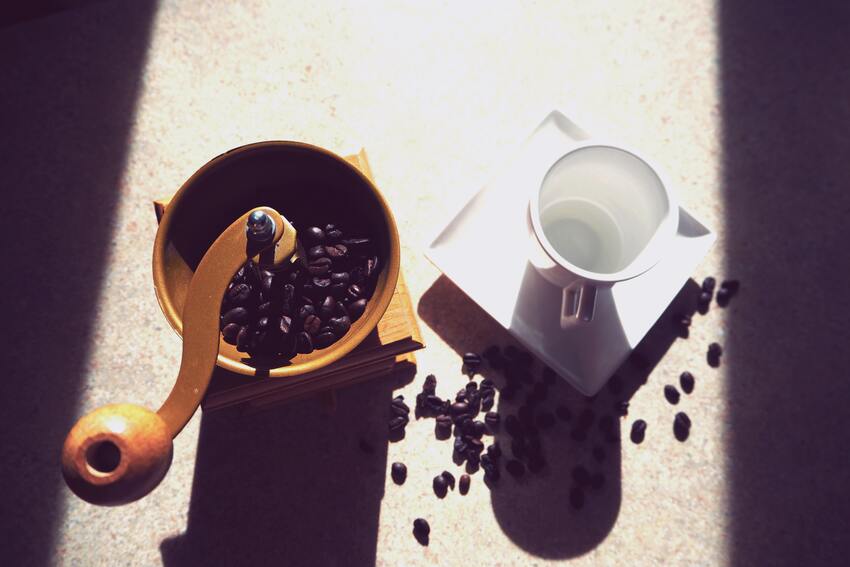
Ground coffee is produced after whole coffee beans have been ground, either manually or with an electric coffee grinder.
The reason coffee is ground is to extract as much flavour as humanly possible from the beans, and this is only possible when hot water has access to tiny coffee particles. The grinds are then added to your coffee maker of choice, for example, a Cafetière.
I put together this article so you can find what is the best coffee to buy for espresso. It is a must-see.
Types of Ground Coffee Available
When buying ground coffee beans online you’ll be given a selection of grind sizes to choose from before you purchase. This can be a bit unclear if you’re used to supermarket shopping. Why?
Because they'll typically only give you a standardised ground coffee option. The trick is to match your grind type to how you make coffee at home. For example, if you're making French press coffee, choose a cafetiere / French press grind option - voila!
Before I delve into the three primary grind size categories, you'll need to understand some basic coffee science. We'll use the analogy. A coarse coffee grind is like 'pebbles' whilst a fine grind is like 'sand'.
Coffee Grind Sizes
Here's a quick 1-minute video I put together on coffee grind sizes. Understanding what grind settings match what coffee maker is really important. It'll help you produce the tastiest ground coffee at home time after time.
Coarsely Ground
A coarse coffee grind setting has larger coffee particle sizes compared to medium and finely ground. This is because the brew methods, like the Cafetiere, require a brewing process called 'immersion brewing'. In other words, the coffee and hot water are infused together for a longer period of time (5-10 minutes), and that is how the flavour is extracted.
By comparison, if you were to use a fine grind setting with the Cafetiere brew method, you'd likely experience bitterness due to 'over extraction'. You may visit our online shop here to buy coarse-ground coffee. It's 100% clean and lab-tested.
Medium Ground
A medium ground coffee consists of medium-sized particles. This sits in the middle between a cafetiere style grind and an espresso grind. This grind type is designed for brew methods that utilise gravity to extract coffee with water.
Brew methods for a Medium Ground Coffee include: Chemex, V60, Filter Coffee, Aeropress.

Finely Ground
A fine grind (see below), is designed for espresso coffee. Espresso uses the applied force from your espresso machine or Moka pot to push water through the puck of ground coffee.
Finely ground coffee is perfectly suited to the Moka pot, espresso machines, and, of course, a Turkish-style brew. To learn more about ground coffee beans for espresso, check out our definitive Top 12 Best Ground Coffee Beans For Espresso. Here's an image of my home coffee machine showcasing what finely ground coffee looks like.
The Ultimate Ground Coffee Buying Guide
I'm really excited to share this ground coffee buying guide with you today. You're going to learn all about the different quality grades of coffee, including where and how to buy the best ground coffee online.
Ready to get stuck into it? You might want to grab a coffee for the read.
Quality Vs Commodity Explained
Before you get to the stage of buying ground coffee online, I want to break down some important information about the quality choices available to you.
This will ultimately help you choose the right ground coffee to suit your personal preferences.
Commodity Grade Coffee
Did you know? That around 95% of the coffee produced worldwide (commercial grade coffee), which is susceptible to mould, mycotoxins and pesticides. All of which can harm your long-term health.
You might be thinking, how on earth can ground coffee harm my health? Let me explain... Unfortunately, as the name suggests, commodity is a low-grade classification of coffee grown for mass production.
Larger cooperations follow unethical farming practices to increase production output. Don't get me wrong, they help supply billions of people with coffee around the world, but there are better ways to operate with health and our planet in mind.
These larger giants need to do whatever they can to boost production efficiency, which is why they utilise machinery and harmful chemicals, such as pesticides, on crops to repel insect damage.
This means commodity grade coffee can be harmful to health as Holly Roser suggests.

Organic Certified Coffee
Compared to commodity-grade certification, Organic certification carries significant weight and is highly recommended.
But why?
Coffee that is certified organic means the coffee farm has been verified by a certification body to ensure that the coffee meets many important checks.
For example, fertilisers used must all be 100% organic. Pesticides must not be used, and a sustainable crop rotation system must be implemented to avoid soil erosion. If you're looking for more information, here is a guide to the benefits of drinking organic coffee.
Speciality Grade Coffee
Ever heard of the term 'Speciality Grade Coffee' before? It's a relatively new term, but it refers to the highest possible standard of coffee available.
It checks all the boxes for organic coffee whilst also adding a layer of sophistication to elevate quality.
For example, a coffee must have no more than 5 defects per 350g. Speciality coffees are also scored using an official grading system.
If a coffee meets the standard of 80 points and above of a 100 point scale, it's classified as speciality coffee. Here is a 15% discount on a speciality coffee you will love.
Now that you're fully up to speed on how the coffee certifications work, you can make an informed decision when buying ground coffee online or in the supermarket.
Where to Buy the Best Ground Coffee?
Online:
If you’re looking to purchase your ground coffee online, you likely enjoy a quick, hassle-free solution. If you want to try us out at Balance Coffee, then give us a go and let me know your feedback.
Otherwise, do a simple search for 'best coffee roasters' to find a coffee company that provides top-quality coffee in just a few clicks.
I wrote an article on coffee for a cafetiere in case you're looking for help choosing coffee for home.
Alternatively, if you'd like to receive ground coffee on autopilot, then you can explore the benefits of our balance coffee subscription, which includes a 15% saving on every order.
At Balance, we only buy speciality-grade coffee, and pride ourselves on healthy coffee that’s good for your body and kind on the planet.
In-Store:
If you prefer buying things in-store, that's okay. There are several places you can stock up on coffee supplies at home.
The supermarket is one, though the coffee is generally not as fresh as it should be due to transportation. Our recommendation is to find a local independent cafe that supplies top-quality, fresh beans. Plus, you'll be supporting small businesses this way,
 Coffee prepared in a V60 Filter Maker
How to Choose the Best Ground Coffee
This is a big question. With coffee being highly subjective, it’s really all down to your personal taste preferences.
But to be honest, it's really about letting your taste buds do all the work. And that means experimenting until you find a coffee you like. There are other factors to consider, however—for example, taste, quality, price, reliability and support from your roaster.
There are also ethical and sustainable practices to consider if you care about the environment. It'd be useful to provide you with a buying checklist to help you choose the best ground coffee in the UK. Don't worry, thank me later!
Ground Coffee Shopping Checklist
1. Flavour / Taste
You’ll be drinking ground coffee daily, so it needs to taste incredible. How you brew it has a huge impact on flavour. Stick to our recommended coffee brewing guides further down in this article, and you'll be in good hands.
2. Healthy Coffee
Is the coffee you're buying healthy? Have you checked the quality scale and sourcing policies? Most importantly, is it free from nasties like Mould, Mycotoxins and Pesticides?
Remember, around 5-6% of coffee produced worldwide is speciality grade. This means the coffee is the best quality you can get. Particularly when compared to sub-standard commodity-grade options.
At Balance, all of our coffee is available in ground coffee format. We carefully sourced from top-quality farms to ensure that we bring you a healthy cup.
We pay a higher price (25%+) for this too. To bring you a coffee guilt-free guarantee. We’re proud to be shipping healthy coffee to customers across the UK every single day.
3. Coffee Freshness
Coffee freshness is similar to bread. Bread deteriorates rapidly when it has contact with oxygen.
Ground coffee experiences the same drop in quality so a correctly packaged freshly roasted ground coffee is key. Buying little and often is my biggest takeaway for you.
4. Price
Price is always a factor for most people when purchasing anything. Although similar to wine and most food and drink products, it's worth spending a bit extra to get all the associated benefits.
You can always benchmark a few options to see which offers the best value for money. If saving money is what you're after, you should look into our coffee subscription. Subscribers save 15% on every single order.
5. Sustainability and Ethical Coffee
As ground coffee is a widely purchased product (due to the nature of its convenience), there are lots of places you can buy ground coffee online. This means you'll need to do your research before you decide on the best option for you.
Always read reviews and look for a company’s sustainability practices to ensure it meets your personal standards.
For example, at Balance, we plant trees every month, donate 1% of sales to a coffee charity, and ensure our coffee bags are recyclable. If you'd like to understand more about what makes a coffee ethical, you can read our guide to buying ethical coffee.
6. Shelf Life
If you’re buying coffee ground, you’ll need to understand that the product's shelf life is greatly reduced. That’s because the small particles make it easier for oxygen to access. Sadly, this kick-starts the ageing process.
Once opened, ground coffee is best used within one to two weeks, so it’s worth checking how long ground coffee lasts and how to keep it sealed.
However, for maximum flavour of each freshly roasted coffee, it's best enjoyed up to 4 weeks from roast date. One of the biggest misconceptions when buying ground coffee in the supermarket is the date on the packaging.
This is likely the use-by date, not the roast date. For ultimate coffee freshness, you'll need to carefully check the label.
 Sam Brand - Pro Cyclist enjoying Balance
Ground Coffee Roast Style
The other consideration you’ll need to make is what roast style to go for. Roast styles consist of light, medium, and dark roasted coffee. Each can play an important role in the coffee you enjoy and choose to buy online.
At Balance Coffee, we have a range of coffee roast profiles to suit everyone, from lightly roasted single origin coffees designed for filter coffee. Medium roasts are perfect all-rounders, and medium-dark roasts are for those who enjoy their coffee with a kick.
We do recommend medium-light, as it brings out the naturally sweet and delicious characteristics of the coffee bean. But that's for you to decide.
Most companies offer a selection between espresso or filter coffee when you're shopping for coffee online.
Buy Espresso Coffee: choose this option if you prefer chocolatey, rich notes with a bit of a punch. Espresso options are generally coffee blends.
Buy Filter Coffee: choose this option if you prefer fruitier, more interesting flavour notes. Filter coffee options are generally single origins.
I wrote an entire piece on the difference between Light and Dark roasted coffee in case you're interested in learning more.
Ground Vs Beans
Coffee is delicious, we know that for certain. But are there any differences between roasted ground coffee and beans? Absolutely.
Here are some fun coffee facts: Ground coffee has a shorter life span than coffee beans.
Really?
Yep. A whole coffee bean can preserve flavour for a much longer period simply because the oxygen cannot access the individual ground coffee particles. As soon as it's ground, both the aroma and flavour will deteriorate.
It will be at lightning speed because the air is able to access more surface area. Ever heard the term 'grind fresh and brew'?
It's a top coffee tip if you're looking to maximise on coffee flavour in your cup. Coffee Beans require a grinder to be ground to the perfect setting. This means you'll need to invest in a coffee grinder, which costs between £30 and £350, depending on what you choose.
If you're ready to upgrade, take a look at our blog covering the best coffee grinders in the UK. If you're the type of person who likes things done quickly without the faff, then ground coffee might be for you.
Using Coffee beans requires some extra effort; however, you'll reap the rewards in terms of flavour upsides, that's for sure.
Ground Decaf Coffee
Decaf get's a lot of stick, but if you love the flavour of coffee, but you suffer from coffee jitters or cannot consume caffeine, then finding a quality ground decaf coffee is essential.
Luckily, our decaf is rated five stars and is highly popular with our customers. You can order online and get it delivered to your door.
If you want to know more, read our detailed article explaining exactly how the caffeine is removed.
How to Store Ground Coffee
Storing coffee may be one of the most important topics to discuss if you care about your morning brew. So how do you store ground coffee?
It's first important to understand that when exposed to air, coffee faces a significant drop if quality and flavour. You should therefore do everything you can to avoid air contact.
Did you know, if exposed to the air for more than 20-30 minutes you will notice an obvious change compared to a freshly ground coffee. Now you'll see why it's important you protect those beautiful grounds at all costs! So what can you do about it?
Invest in A Good Quality Storage Container
Store coffee in an airtight jar with a suction lid. This will ensure no drop in quality. Make sure the coffee brand you buy from uses resealable, sturdy packaging. This will prevent air from getting in.
Don't panic if you see a valve on the coffee bags. Check out our guide to the best storage containers in the UK for the best selection of products.
Most bags have a one-way valve, which is there to allow natural CO2 to escape, which is an important part of the post-roasting degassing period. Here are some more common questions around storing coffee.
Should I put coffee in the fridge? Absolutely not!
Unfortunately, this is one of those coffee myths which has circulated for a long time. When you add coffee to the fridge, it absorbs moisture and takes on unpleasant smells from other food products (cheesy coffee, no thanks!).
It's best to store your ground coffee in a jar inside a cool, dry place away from sunlight. Will room temperature affect your coffee? Y
es actually, Sunlight and temperature is another factor to consider when storing coffee correctly. When the room temperature changes, your coffee's density changes, which can have a big impact on coffee extraction.
In other words, it can ruin the flavour—another reason storage is so important for brewing great coffee at home.
Freshness Tips
So you're about to buy amazing coffee online? I recommend making sure your coffee is freshly roasted and shipped quickly.
But why? If your coffee has already lost freshness due to transportation or poor shelf life management (Ahem, supermarket coffee), then there is no chance for the ultimate morning coffee experience.
This also highlights another issue surrounding the expiry date. When looking at coffee lifespan, you should use ‘roast date’ as the indicator of freshness rather than ‘expiry date’.
The company determines expiration, so it could be 2-year-old coffee if that's the parameter they use. With the roast date, you can clearly see when it was produced, so you'll know exactly when to use it (or bin it).
FAQs
How to Brew?
One question we hear often is, Can you just add hot water to ground coffee? You can get away with just pouring water over your coffee and get good results.
However, if you want to really maximise the flavour from every cup, you can follow these steps to make coffee like a pro. Enter coffee pro (that's you). First, you'll need to invest in some coffee scales.
Then, you can follow one of our brew recipes to perfect the measurements. You can start with our ultimate guide to cafetière coffee.
Once you've mastered this recipe, you're officially brewing coffee better than most people across the UK (congratulations in advance).
Do you need a coffee maker for ground?
Yes, ground coffee requires a coffee maker which is used as a vessel to hold the coffee grounds.
There are a wide range of coffee brewing devices you can choose from. If you're looking for something simple, then start with a cafetiere. Want to become a home barista? Simply, upgrade to an Aeropress or another common coffee making device.
Which is healthier, ground coffee or instant?
Ground coffee is without doubt a healthier solution than instant coffee. Why? Simply put - its fresher and.has less chemical processes applied during the processing stage.
Once brewed, the water is removed using evaporation techniques. The Instant is then frozen to create the coffee granules. Once you pour boiling water on to the coffee powder, the coffee dissolves in your cup.
How much per cup?
One common question I often get asked is, how much to use per cup? It will depend on what coffee brewing device you are using and what strength you prefer however, is a good all round guideline: 13-15 grams = Weaker 15-18 grams = Medium Strength 20-23 grams = Stronger
Can you use Ground Coffee as Instant?
Not exactly. Instant coffee is classed as 'freeze dried' coffee. This means, it's soluble in hot water so the grounds pretty much disappear under the boiling temperature.
Coffee grounds are particles which are ground coffee the beans fresh. This means there is residual material left in the cup after making coffee. The result is a much cleaner, more flavoursome cup than Instant Coffee.
Can you drink ground coffee without a coffee machine? Yes you can. In fact, for best results with a coffee machine, you should always use whole bean coffee as you'll produce a better crema. It's also better for flavour too.
Our recommendation is that using ground coffee generally works best for anything coffee-related. For example, Cafetière, Aeropress, V60, Chemex and the Moka Pot is okay too.