




Assembly Coffee is the most recognised speciality roaster in the UK.
It is a B-Corp and carbon-neutral certified, with traceable sourcing.
Assembly provides speciality-quality roast profiles developed for Michelin-starred restaurants and some of London's best independent cafés.
It’s best for home brewers seeking a dependable espresso blend and for conscious buyers seeking sustainable, ethically sourced coffee.
Quick Verdict: The Espresso Blend is a dependable everyday cup. The House Espresso, on the other hand, is more interesting and unique. Selected Capsules are convenient, and the Assembly Coffee subscription is reliable.
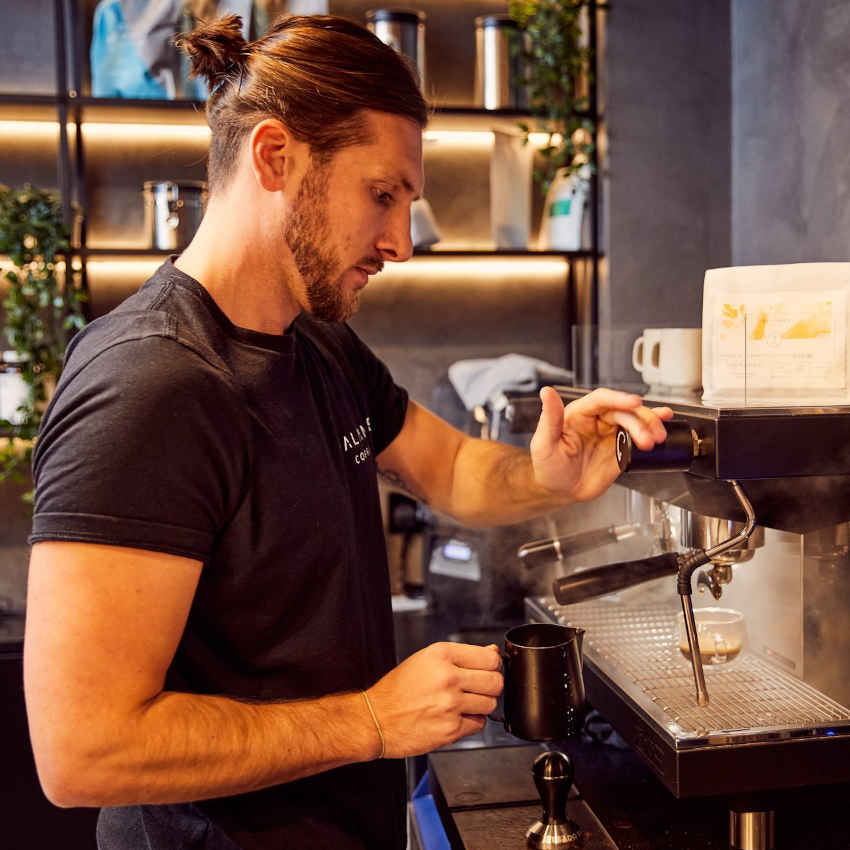
I’m James Bellis, founder, barista, and coffee trainer. For over 14+ years, I’ve worked with more than 100 roasters across the UK, brewing coffee for over 199,000 people. I also hold an SCA Coffee Skills Diploma, which reflects my love for clean coffee.
Overall Average Score: 80.8/100
However, if you truly want healthy, mould-free coffee…
I don't know whether Assembly Coffee currently tests for mould and mycotoxins.
But if they do, I am happy to retract my claim and update this article accordingly.
What Is Assembly Coffee?
The brand has a solid pedigree.
Assembly Coffee was founded in 2015 in Brixton, London, and it has an unusual origin story for real.

Co-founders of Assembly, Nick Mabey and Michael Cleland, previously worked at Volcano Coffee Works.
They met through a brand launch project and went on to build Assembly Coffee together.
Nick brought sourcing and roasting expertise, and Michael brought brand strategy and marketing.
Before building the assembly, they spent a year talking to cafe and restaurant owners.
To understand what they wanted from a roastery rather than building it and then finding customers.
The decision to name the brand “Assembly Coffee” was left to a customer vote.
Assembly Coffee’s Background |
|
|---|---|
|
Founded |
It was founded in Brixton, London, in 2015. |
|
Business Model |
Small-batch speciality coffee roasters with a subscription model. |
|
Sustainability |
Assembly is CarbonNeutral and uses packaging such as infinitely recyclable aluminium pods and rice paper bags. |
|
Certifications |
B Corp certified and CarbonNeutral Certified. |
|
Retail Presence |
They have a bar: Door Coffee bar in Brixton, open Monday to Saturday. |
|
Where to Buy |
Directly from the Assembly site at assemblycoffee.co.uk |
Where Is Assembly Coffee Roasted?
Assembly coffee has been roasting out of a 19th-century fire station in Brixton.
And in my opinion, they are one of the best if you decide to buy coffee beans online.

They have a sensory lab and Giesen and Loring roasting equipment.
Both of which are the most respected platforms in the speciality coffee industry.
Brixton Roastery also has its own on-site cafe, the Door Coffee Bar, which is open Monday to Saturday.
Assembly Coffee's Sourcing and Sustainability Philosophy
Assembly has long-term relationships with the coffee producers.
In an interview, Founder Nick Mabey says that Assembly has been involved with the Red Association since its founding.
Red Association is a Colombian growers' collective where members share resources and supply selected UK roasters.
It requires the buyer to commit to buying coffee at a higher, steadier price.
It is a financial risk, but enables the farmer relationships that produce great coffee lots.
Is Assembly Coffee B Corp Certified?
Assembly is one of the few in the UK to hold both the B-Corp and CarbonNeutral certifications.
B Corp certification requires the brand to have verified standards in five areas.
B Corp also renews every three years after checking the same standards.
How Does Assembly Coffee Position Itself vs. Mainstream Brands?
Assembly Coffee’s positioning centres firmly on speciality coffee.
It doesn’t compete with supermarket coffee or mass market brands.
Assembly served coffee at the leading independent cafés, premium restaurants, and luxury hotels.
Across London, the UK, Europe, and internationally.
Compared with other roasters, Assembly’s edge lies in its depth of sourcing and wholesale credentials.
How We Tested Assembly Coffee
For the Assembly Coffee Review, I used my testing criteria, a scoring system, and specific equipment and brewing methods.

Testing Criteria Overview
I used my SCA-adjacent Balance Coffee Testing Framework for every coffee I review and test.
I assessed the coffees for their flavour complexity at multiple temperatures.
And, acidity, body, and mouthfeel, finish length, character, roast development, and value for money.
The tasting took place between 07:30 and 10:30 am.
I had water and plain crackers, with no food beforehand for palatal recovery.
And, used Brita-filtered water, and set the temperatures based on the coffee roast.
Brewing Methods Used
Espresso: I used my Breville Creatista Plus to brew espresso.
At an 18g coffee dose, I extracted a 36g yield at 94°C and 9 bars of pressure.
Filter: To brew a filter, I used a Hario V60 and a Chemex. I added a 15g dose of coffee to 255ml of water at 96 °C.
Ratio 1:17 and used the two-pour method.
Moka pot: With a medium-fine grind, I brewed 3 cups on the stovetop, keeping it on low heat throughout.
Pods: I used my Creatista Plus to pull a lungo and an espresso to test the pods.
Who Did the Testing?
I conducted this Assembly coffee review with the Balance Coffee Taste Testing Team, using the SCA-adjacent Testing Framework.
Below is how I weigh each criterion in the final score.
Our Scoring Framework Explained
The scoring criteria I use to score the coffee in the Assembly Coffee review:
Flavour
Flavour has the most weight in my review.

I assess for aroma, clarity, complexity, and consistency as well.
I test each blend/single origin with at least two brew methods. 25/100 points
Health & purity
Is the coffee mycotoxin, mould, and pesticide-free? Brands that publish independent lab results score highest. 20/100 points
Freshness
I check for a roast date, batch size, and delivery speed. Brands that send coffee bags without a roast date are penalised automatically. 15/100 points
Traceability
Can I trace my cup back to the farm where it was grown, the very producer who harvested it?
I assess farm-level sourcing detail and supply chain transparency in my Assembly coffee review.
If the coffee has named origins and producer relationships, it scores the highest. 15 / 100 points
Brand trust
I check for verified customer reviews.
How does the average consumer experience the brand is the question I ask.
I also look for industry credentials and the ratio of positive to negative feedback across platforms. 15 / 100 points
Value for money
Does the coffee justify the price?
I calculate the price per cup at a standard 14g dose.
The scores I give reflect the quality delivered for the price paid. 10 / 100 points
Every coffee I review, including my Balance Coffee Organic coffee beans, is reviewed according to this main framework.
The Scoring Framework |
||
|---|---|---|
|
Criteria |
Scores |
Reason |
|
Flavour |
25 |
If the cup is exceptional and makes me think of nothing else but its taste. |
|
Health and Purity |
20 |
Are the beans free of mould, toxins, and pesticides? |
|
Freshness |
15 |
Is the roast fresh and done with care? Does the cup prove it? |
|
Tracebility |
15 |
Can I trace my morning coffee beans back to the farm where they were grown? |
|
Brand Trust |
15 |
Do the customers trust the brand, and does it have industry credentials? |
|
Value for Money |
10 |
Given the quality of the cup, is it providing full value for the money? |
|
Total |
100 |
Is the cup flavourful and clean overall? |
I have the scoring criteria for the Assembly Coffee review.
Let’s see now how Assembly Coffee beans will perform against the scoring criteria.
Assembly Coffee Beans Reviews
In the Assembly Coffee beans review, I tested the Assembly Espresso Blend and the Assembly House Espresso.
Let’s start this section with the Assembly Espresso Blend review.
Assembly Espresso Blend
I made this as an espresso first, then a flat white, and finally a filter via a Hario V60.

Flavour Profile & Tasting Notes
The aroma is inviting and uncomplicated.
The baked chocolate and roasted nuts swirled around when I brewed it after grinding the coffee beans fresh.
I tasted dark milk chocolate and caramel in the first sip of espresso.
It has a rounded acidity with a citrusy note, peels rather than sharp lemon.
The mouthfeel is full and balanced.
When the shot cooled, a sweetness emerged, like toffee.
In a flat white, the texture is syrupy, the flavour is coherent.
As a filter coffee, the blend lost some of its structural appeal.
But that’s fair, because this blend is roasted to be best enjoyed as espresso.
Roast Level
The roast is medium-dark, with no burning or ashiness.
It serves its purpose of delivering a balanced body and flavour in espresso and milk-based drinks.
Bean Origin & Sourcing
The Espresso Blend has one bean type sourced from the DR Congo, from the Rebuild Women's Hope Smallholder Co-operative.
It’s processed naturally, and it’s not a generic “South American and African Blend.”
It is traceable to the farm, and the level of transparency is commendable.
The Espresso Blend is rotated in line with seasonality and Assembly’s sourcing program.
So bean percentages vary from harvest to harvest.
Price & Value for Money
Espresso Blend is priced at £10 per 200g and £50 per kg retail.
The subscription pricing brings this down to 5% off 1kg and 10% off 2kg, with free delivery.
Assembly is at the higher end, but it’s justified for the sourcing model and B-Corp overhead.
The value improves with getting a subscription.
What I Like
-
It’s an excellent espresso blend, with the chocolate and caramel developed. Not harsh or flat, just balanced.
-
The texture is weighty without being astringy, with milk, its sweetness doesn’t get buried.
-
Its reliability is its best feature. Every shot I pulled consistently tasted the same.
What I Don't Like
-
There’s no disclosure on whether the beans are mould-free and pesticide-free.
-
There’s nothing wrong with this blend, but it’s not outstanding either.
-
Priced at £10 per 200g, you’re paying for the sourcing more than the excellence in the cup.
-
The blend is seasonally adjusted, so the routine drinkers who seek a consistent cup may feel frustrated.
Customer Feedback
Reviewer Axel Dopfer wrote on review.co.uk
“Assembly coffee kickstarted my now fully fledged coffee obsession. Excellent coffee made by excellent people.”
And, John Buller reviewed:
“I use the espresso blend and it's been a staple for my coffee machine for the last few years.
The main criticism is that the price is on the higher end for a 200g bag.
Verdict (score out of 100)
The Espresso Blend is a well-sourced, dependable blend to make your every espresso and flat white.
There’s no mention of its lab testing for mould and pesticides.
Otherwise, it would really earn my 100% trust.
But, it's fair to admit, it’s a pleasurable cup, not an exciting one.
If you decide to get it, buy it on a subscription to make the value make sense.
Espresso Blend Beans Final Scores |
|
|---|---|
|
Flavour |
21/25 |
|
Health and Purity |
13/20 |
|
Freshness |
14/15 |
|
Tracebility |
13/15 |
|
Brand Trust |
12/15 |
|
Value for Money |
8/10 |
|
Total |
81/100 |
I have finished reviewing the Assembly Espresso Blend review.
Now is the time for the next beans I tested, the Assembly House Espresso.
Assembly House Espresso
This is the most interesting cup in the Assembly espresso range.
It has a complexity that rewards attention, and it’s the hero of this Assembly coffee review.

Flavour Profile & Tasting Notes
The dry aroma hits you with stone-fruit notes and a sweet-spice undertone.
In espresso at a 1:2 ratio, the open note is sweet, and at mid palate, the stone fruit emerges.
The finish is sweet, with notes of caramel and milk chocolate.
As a flat white, the milk chocolate dominates while the fruit stone softens.
At 96 °C in my Hario V60, the peach note sharpens and becomes much cleaner.
The House Espresso has filter potential despite its designation as espresso, which surprised me.
Roast Level
The roast is light to medium.
The roaster has restrained caramelisation to preserve the fruitiness and sweetness in the Caturra/Catuai combination.
Bean Origin & Sourcing
The House Espresso is made from Caturra and Catuai varieties.
Caturra and Catuai are both classic espresso varieties, sourced from Finca Santa Teresa in Panama, Central America.
Caturra brings bright acidity and floral notes, while catuai provides a body and moderate sweetness.
This combination creates a blended coffee that’s more interesting than a standard blend and more stable than a single-origin.
Price & Value for Money
At £10 per 200g, it’s the same retail price as the Espresso Blend.
Considering the microlot sourcing and the complexity in the cup, the pricing is justified compared to the Espresso blend.
What I Like
-
House Espresso gives a smooth, sweet, silky espresso that works both black and with milk.
-
In the cup, House Espresso blend offers greater precision, more layering, and a finish that lingers.
What I Don't Like
The seasonal rotation of blends may pique coffee enthusiasts' curiosity.
But for drinkers seeking a consistent cup, this can be disappointing.
Health and purity are my greatest concerns when testing coffees.
Not knowing whether the Assembly has organic beans is a no for me.
Customer Feedback
Mark Robinson’s review stated:
“Love the flavour.”
While Ian Toogood reviewed:
“The coffees are interesting and diverse and the service in excellent.”
House Espresso gets more enthusiastic feedback.
The positive reviews are mostly drinkers’ surprise at how well it performs with milk, given its lighter roast.
Verdict (score out of 100)
The House Espresso is Assembly’s brilliant espresso product.
It has a better origin story, and in the cup, it’s more complex, with a surprisingly fruity flavour.
House Espresso Blend Beans Final Scores |
|
|---|---|
|
Flavour |
23/25 |
|
Health and Purity |
13/20 |
|
Freshness |
13/15 |
|
Tracebility |
14/15 |
|
Brand Trust |
13/15 |
|
Value for Money |
8/10 |
|
Total |
84/100 |
In this review of Assembly Coffee, it’s now time for the Assembly Coffee pods review.
Assembly Coffee Pods Reviews
Assembly introduced their espresso coffee capsules in 2023: Selected Espresso.
But, before you get into the Assembly Coffee caps review…

If you’re new to coffee pods and capsules, here’s how to use coffee pods.
Assembly Coffee Caps — Selected Espresso
The Assembly Coffee caps are known for their sweetness and viscosity, which translates to the cup.
Flavour Profile & Tasting Notes
I noticed that the aroma while brewing is sweet and fruity, more aromatic than most Nespresso pods.
The sweetness is its main feature, with notes of cherry, almond, and milk chocolate.
It has a velvety crema and a clean finish that lingers with a toffee tail.
Roast Level: Medium.
Compatibility
Assembly coffee pods are compatible only with Nespresso Original machines.
They won’t work in a Vertuo, Keurig, Tassimo, or Dolce Gusto.
The pods are also recyclable via Podback, through a kerbside collection or a drop-off scheme.
Price & Value for Money
Assembly Coffee capsules are priced at £12 for 10 pods, or around £1.20 per pod.
The sustainability and sourcing story may justify their price, but in fact, these are expensive coffee pods.
What I Like
-
Espresso Selected capsule’s sweetness, dense and creamy body, velvety thick crema make it a pleasurable pod.
-
Assembly uses aluminium for its pods, which is the best material for quality, consistency, and recycling.
What I Don't Like
-
The pod format limits the complexity and excitement the beans bring, regardless of what blend goes inside it.
-
The capsules are expensive at £12 for 10 pods.
Customer Feedback
Brandon Mitchell’s review on Trustpilot noted,
“Interesting coffee, good customer touchpoints besides.”
Burak Yigit Kaya reviewed:
“Always great quality coffee and now with amazing Nespresso pods. Love them!”
The Assembly coffee caps have attracted speciality coffee buyers.
Positive feedback always mentions the exceptional crema.
While the main complaint is about the per-pod price.
Verdict (score out of 100)
The Assembly coffee pods are good for the quality and convenience.
Coffee Caps — Espresso Selected Final Scores |
|
|---|---|
|
Flavour Clarity |
18/25 |
|
Crema |
14/20 |
|
Aroma |
12/15 |
|
Body |
11/15 |
|
Finish |
12/15 |
|
Consistency |
9/10 |
|
Final Score |
76/100 |
Assembly Coffee Caps are great for quality, flavour, and convenience, but is the subscription worth it?
So, here’s the detailed Assembly Coffee subscription review to answer that question for you.
Assembly Coffee Subscription Review
I signed up for the Assembly Coffee subscription, and below is my overall experience.

Bean & Ground Subscription Options
Assembly offers subscriptions of 1kg and 2kg of coffee, delivered every 2 to 6 weeks.
You can choose if you want whole beans or ground coffee.
Both the Espresso Blend and House Espresso are available for subscription.
You also get 5% off your subscription and complimentary shipping.
Pod Subscription Options
You can get the Assembly coffee caps on Assembly’s website.
However, the flexibility of the pod subscription is more limited.
It’s a good financial decision to get a pod subscription if you’re a regular pod user.
Delivery Frequency & Flexibility
You can choose a delivery frequency of 2 to 4 weeks.
And, you can adjust the delivery time, day, and quantity through Assembly’s online portal anytime you want.
Assembly delivers two 200g bags per delivery, as standard, in fully recyclable rice paper bags.
Price & Value for Money
The Assembly Coffee’s subscription system rewards volume.
If you buy 1 kg of coffee, you get 5% off.
If you get a 2kg bag, you get a 10% off, and the delivery is complimentary as well.
Let’s suppose you get 2kg of freshly roasted coffee every fortnight at 10% off with free delivery.
For the Assembly, the roasting quality alone is a steal.
How It Compares to Other Coffee Subscriptions
Assembly's subscription has quality, sustainability, and producer transparency credentials, as well as B Corp status.
Quality is the main feature that gives Assembly the edge over competitors.
Verdict (score out of 100)
I’ll give the Assembly subscription an 82 out of 100.
It’s a well-structured subscription with savings, complimentary delivery, and the flexibility to adjust.
The 200g coffee retail format is the only limitation.
The 2 kg subscription is the best for quality and value.
Assembly Coffee Products Compare
|
Product |
Type |
Roast |
Bean Origin |
Price |
Score |
Best For |
|---|---|---|---|---|---|---|
|
Espresso Blend |
Whole bean/ground |
Medium |
Multi-origin (including DR Congo) |
£10 per 200g bag |
81/100 |
Daily espresso & milk based drinks lovers. |
|
House Espresso |
Whole bean/ground |
Light-medium |
Finca Santa Teresa, Panama, Central America |
£10 per 200g bag |
85/100 |
Espresso enthusiasts and filter coffee lovers, too. |
|
Coffee Caps – Selected Espresso |
Nespresso-compatible pods |
Medium |
Central America / Peru (natural) |
£12 per 10 capsules |
76/100 |
Nespresso users are upgrading to Speciality-quality pods. |
Is Assembly Coffee Worth It?
Assembly Coffee has some delicious beans, capsules, and qualities that make it worth it.
Let’s assess what Assembly does well, and where it falls short in the Assembly speciality coffee review.

What Assembly Coffee Does Well?
Sourcing transparency is their main feature, along with producer collective, processing method, and specific farm or region.
The roasting is competent, with the development correct across the range.
The House Espresso roast in particular shows skill in preserving the origin's character.
Where Assembly Coffee Falls Short?
My main concern is that Assembly Coffee doesn't get its coffee lab tested for pesticide residue, mould and toxins.
The price-to-size ratio in the retail format is a bit pricey.
Casual buyers will not benefit from the subscription savings and will have to pay £10 for 200g.
The pods are good for sustainability, but expensive.
Also, the Espresso Blend’s coffee rotation may put off people who want a consistent cup year-round.
Who Should Buy Assembly Coffee?
Home-brewers who want an espresso blend and prioritise quality.
Someone who wants to learn how to dial in a lighter roast and still get delicious coffee.
Nespresso Original Line machines are for users who want to upgrade to Speciality-quality pods.
Speciality coffee enthusiasts who want a quarterly taste surprise experience with their coffee beans.
Who Should Look Elsewhere?
-
If you're a health conscious drinker, looking for organic coffee beans which are lab tested for mould and pesticides.
-
Buyers who want the speciality coffee on a budget without paying for the sourcing model.
-
Drinkers who drink only from a single cup and hate surprises in it.
-
Filter-only drinkers may find Assembly’s coffee catalogue narrow for their preferences.
Where to Buy Assembly Coffee?
You can buy Assembly online via these:
Assembly Coffee Website
You can directly buy from Assembly Coffee’s website at assemblycoffee.co.uk.

You will find the full range of coffees here, including limited-edition and single origins not available elsewhere.
You can buy one-off items or subscribe on their website.
Shipping is free on orders over £45 and complimentary on all subscriptions.
Third-Party Stockists
Prices start at £10 for a 200g bag through third-party stockists.
Speciality retailers such as The Coffee Guy also offer some blends.
But to get the freshest coffee, buy directly from Assembly’s website and, preferably, through a subscription for maximum savings.
Subscription Options Available
The Home subscription option is available only on the Assembly website.
You can get the 1 kg coffee at 5% off and complimentary shipping.
Or 10% off 2 kg of coffee for the most savings.
Office subscriptions are also available with a 6kg package with free shipping every two weeks.
You can also subscribe directly on the website to receive pods.
If Assembly coffee doesn’t feel like the right fit on any front.
There’s a UK speciality roaster worth considering as a direct alternative.
Assembly Coffee Alternative (Balance Coffee)
Okay, I know it's my own brand.
But I have conducted blind-testing on it with my team according to my framework.

And it has shown great results in it.
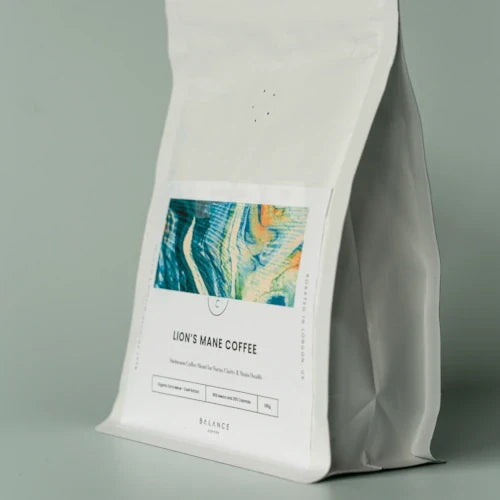
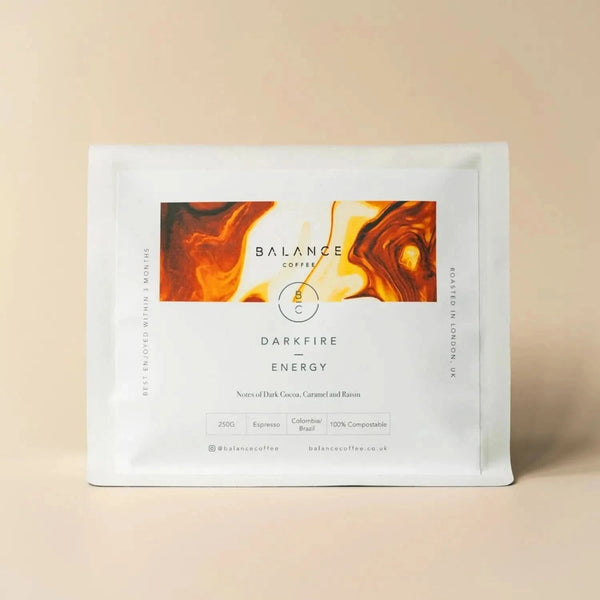
Balance Coffee is a certified organic coffee roaster producing high-quality, organic coffee beans.
Balance focuses on health-conscious coffee drinking.
The beans are third-party lab-tested for mycotoxins and pesticide residues.
This level of quality control is for speciality buyers who value clean sourcing and coffee’s effect on their health.
Balance offers coffee blends, single origins, and a flexible subscription model that gives you an extra 15% off.
Their subscription is consistently praised and ranked among the top UK coffee subscriptions by independent reviewers.
How Balance Coffee Compares on Quality, Sourcing, and Price
Balance Coffee competes on health transparency and focuses on producing clean coffee beans.
Balance sources its beans from traceable farms as well.
It has a broader catalogue of espresso coffee beans, filters, and blends that suit more casual brewing setups.
On price, Balance Coffee is also at a premium speciality coffee level.
But the subscription has more flexibility for new subscribers.
I recommend buying Balance coffee beans online…
Especially if you're looking for organic beans with a strong health and sustainability narrative.
Frequently Asked Questions
Some questions you might have, I have answered:
Is Assembly Coffee good quality?
Yes, Assembly Coffee is high-quality speciality coffee. They have in-house Q Grader-level expertise. Their espresso range is well executed, especially the House Espresso, which stands out.
Where does Assembly Coffee source its beans?
Origin varies by season and product. The regions, Assembly sources its beans from include: Colombia, Ethiopia, Central America (including El Salvador and Honduras), Peru, and the DR Congo.
Is Assembly Coffee ethically sourced?
Yes, Assembly sources ethically. They’ve been part of the Red Association, the Colombian growers' collective, since founding the company. The association is a commitment to buying at a higher and steadier price.
Is Assembly Coffee B Corp certified?
Yes, Assembly is both B Corp- and CarbonNeutral-certified. The B Corp status requires the brand to meet verified standards across five areas and is renewed every three years.
Does Assembly Coffee offer a subscription?
Yes, Assembly Coffee offers a subscription in 1 kg and 2 kg formats, delivered every 2 to 4 weeks. Subscribers receive complimentary shipping and a discount based on their order size. The office subscription can scale up to 6 kg, and the delivery frequencies can be adjusted.
Are Assembly Coffee pods Nespresso compatible?
Yes, Assembly coffee pods are Nespresso Original Line compatible and will not work in any other coffee system. Buy only if you have a Nespresso Original Line machine.
What is the best Assembly Coffee product to try first?
Get started with Assembly’s House Espresso because it's the most expressive. For pods, Assembly’s Selected Espresso capsules are a good entry point as well.
Conclusion
I’m going to conclude the Assembly coffee review.
Assembly Coffee has earned the reputation it has.
With fantastic roasting, ethical sourcing, B Corp certification, CarbonNeutral operations, and the House Espresso Blend that earns its praises.
The only weaknesses are a lack of transparency in quality control, a small retail format, expensive pods, and seasonal inconsistency.
Some of these weaknesses are inherent to speciality coffee rather than operational failures.
Let's take a look at the final Scores of our Assembly Coffee review one last time.
Assembly Coffee Review Final Scores |
|
|---|---|
|
Espresso Blend |
81 |
|
House Espresso |
84 |
|
Selected Espresso Coffee Caps |
76 |
|
Subscription |
82 |
|
Final Average Scores |
80.8 |
If you’re seriously looking for an espresso for home brewing, start with a House espresso subscription.
Let the beans rest for 7-10 days past the roast date.
Pull the shot at 18g in and 36g out at 94 °C, and let the cup speak for itself.
However, if your priorities tilt toward health certifications, organic sourcing, or a broader filter catalogue.
Balance Coffee mould-free beans are your go-to.