







Coffee pods have transformed the way I make my morning coffee.
There’s no mess, no time wasted anymore, just insert, press, and brew.
Coffee pods offer a fast, mess-free way to make consistent coffee at home. Using the correct pod for your machine and selecting the right cup size helps avoid weak or poor taste. Regular cleaning and proper storage also improve flavour. While pods are convenient, they cost more and offer less control than ground coffee.
Knowing how to use coffee pods makes a huge difference to your cup.
The right machine, pod, setting, and a few habits make your life easier and your coffee delicious.
What Are Coffee Pods?
A coffee pod is a single-cup portion of pre-ground, ready-to-brew coffee. You insert it into a machine, press a button on your machine to brew your coffee.
Coffee pods come in various flavours and are a convenient alternative to brewing coffee at home.
In households with different tastes, coffee pods save the day for coffee lovers.
The terms "coffee pods" and "coffee capsules" are used interchangeably, but there’s an important distinction.
Pods vs Capsules
Coffee pods are soft, disc-shaped pouches made from filter paper. They’re like a large flat teabag filled with coffee grounds.
The coffee capsules are coffee grounds sealed in a rigid aluminium or plastic container.

Capsules work with specific branded coffee systems, such as Nespresso, Keurig, or Dolce Gusto.
The dividing line between them is: Coffee pods are for flow-through brewing.
Water passes through the pods, which results in a lighter, smoother, regular coffee.
Coffee capsules are designed for pressurised extraction.
The machine injects pressurised water through a capsule, resulting in espresso-like coffee with rich crema.
Take a quick look at this table to understand the difference between coffee pods and capsules.
|
Coffee Pods |
Coffee Capsules |
|---|---|
|
Soft, disc-shaped filled with coffee grounds |
Rigid sealed containers filled with coffee grounds |
|
Made of filter paper |
Made of aluminium or plastic |
|
Flow-through brewing |
Pressurised extraction |
|
Delivers regular smooth coffee |
Delivers stronger Espresso-like coffee |
How coffee pod systems work?
Pod systems have one simple goal: consistent, convenient coffee with minimal user input.
Coffee pods contain a precise dose of coffee grounds sealed to preserve freshness.

The machine does the rest, from setting the temperature to pressurising water, and forcing it through the pod at a controlled rate.
Every major pod system is designed for specific coffee machines.
Nespresso-compatible pods work in Nespresso machines, while Keurig K-Cups work in a Keurig.
Machine compatibility matters, and the wrong pods in your machine can damage it.
How Do Coffee Pods Work? (Simple Explanation)
Coffee pods work with pressure-based brewing. When you insert a capsule into a machine.
Water is heated in the machine’s boiler, and the needles inside it puncture the pod.

One at the top injects hot pressurised water into the pod coffee.
The one at the bottom allows the coffee to flow into your cup.
This process takes from 20 seconds to 2 minutes, depending on your coffee system.
And extracts flavour, aroma, and caffeine in seconds.
So, how do coffee pods work?
Not all machines are the same, and brewing technology and pressure vary in different machines.
An espresso machine uses 9 bars of pressure to get a perfect extraction.
Nespresso Original machines are at 19 bars of pressure. Keurig uses approximately 1.4 to 2 bars, because they’re designed for filter-style drip coffee.
Dolce Gusto operates at 15 bars of pressure and delivers espresso-style drinks.
Take a quick look at this table to understand the difference in brewing technology.
|
System |
Pressure |
Brew Style |
Best For |
|---|---|---|---|
|
Keurig |
1.5 to 2 bars |
Drip style |
Americano-style coffee |
|
Nespresso Original |
19 bars |
Espresso style |
Espressos and Lungos |
|
Nespresso Vertuo |
Centrifusion(sppining system) |
Espresso and large cups |
Versatile cup sizes |
|
Dolce Gusto |
15 bars |
Espresso style |
Variety of drink types |
Types of Coffee Pod Machines You Should Know
The major common coffee machines are Nespresso, Keurig, Dolce Gusto, Espresso with adaptors and De’Longhi.
Each works differently and accepts only compatible pods.

Keurig machines
Keurig dominates the North American pod market and uses K-Cup pods. Keurig brewers are drip-style machines.
Keurig heats water and passes it through a K-Cup at low pressure, producing a large filter-style cup.
Nespresso
Nespresso makes two different systems, and the pods are not interchangeable.
-
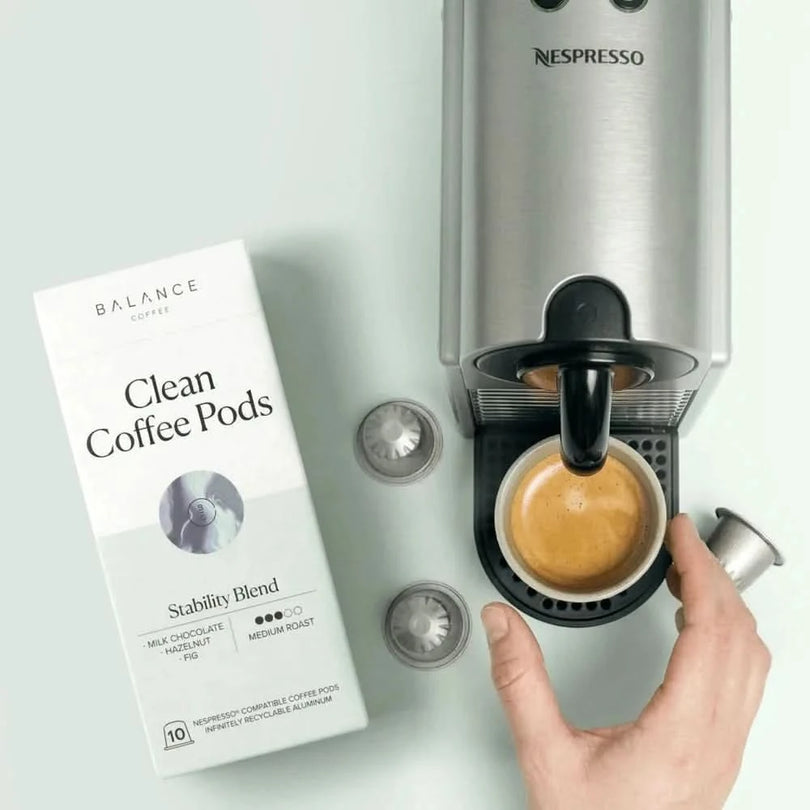
Nespresso Original: It is the classic system, designed for espresso and lungo. It uses espresso-like high extraction. It is compatible with a wide range of third-party pods like Balance Coffee Pods, Assembly Coffee Pods, L’OR capsules and brands covered in this grind coffee pods review.
-
Nespresso Vertuo: This system uses centrifusion technology. The machine spins the pod at high speed while the hot water rushes through it. It is only compatible with Nespresso pods.
Dolce Gusto systems
They use a two-pod system for drinks that require milk.
The Dolce Gusto system offers the widest range of drinks in pod form.
E.g., from espresso to cappuccino, latte macchiato, and iced drinks.
De’Longhi Compatibility
De’Longhi manufactures machines across multiple ecosystems.
If you have a De’Longhi, pod compatibility depends on your model.
Check your model number against the manufacturer’s compatibility guide before purchasing pods.
Espresso Machines with Pod Adapters
Some espresso machines include a pod adapter that accepts ESE (Easy Serving Espresso).
ESEs are soft, paper-wrapped pods that work with the machine’s portafilters at full espresso pressure.
What Are the Common Mistakes People Make With Coffee Pods?
Most pod problems trace back to a handful of avoidable errors.
You’re using the wrong pod or selecting the wrong cup size.

Storing your coffee the wrong way, or you’re not cleaning your machine properly.
All these mistakes below can lead to bad coffee.
-
Machine Compatibility: Always verify machine compatibility before you buy pods. A wrong fit can damage your machine.
-
Incorrect Cup Size: Pod machines offer different cup size options. Choosing a larger cup size for an espresso pod can produce weak coffee. Choose a 40ml cup size for an espresso pod.
-
Poor storage: Coffee stales rapidly when exposed to air, moisture, light, and heat. Leaving your coffee in a humid kitchen, near a hob, or in direct sunlight can affect its taste. Store in a cool place in a drawer or cupboard.
-
Not cleaning/descaling: Hard water leaves mineral deposits on your machine. These deposits slow brewing time, reduce water pressure, and damage the machine. It’s important to clean the drip tray and capsule holder weekly and descale it monthly or sooner if needed.
Take a quick look at this table to identify your problem and find a solution.
|
Problem |
Solution |
|---|---|
|
Wrong Pod for your machine |
Always verify that the pod is compatible with your machine. |
|
Incorrect cup size |
Brew an espresso at 40ml. |
|
Poor storage |
Store in a cool place. |
|
Cleaning issues |
Clean the drip tray and capsule holder weekly, and descale every month. |
(Basic 3-Step Method)
Regardless of what system you own, the core process is the same.
You insert the pod into the pod compartment, then firmly close the lid.

Press the brew button for your desired cup size, and the machine heats water, pressure builds, and your coffee brews.
Important Brewing Factors Most People Ignore
Certain brewing factors shape your cup, such as water levels, cup size, temperature and pressure.
Brewing with a low water level makes the machine work harder. Because it causes inconsistent temperature and pressure, resulting in thin, sour coffee.
Fill the water reservoir before it drops below the minimum line.
Cup size affects taste and strength. More water through a pod results in weak coffee.
Even if it’s an Americano, brew an espresso pod at 40ml and then add hot water separately.
Knowing it with pod machines makes a lot of difference to what ends up in your cup.
How to Use Coffee Pods in a Keurig Machine
Keurig machines are quite straightforward to use. Here’s it in a Keurig to make the best coffee out of it.

Instructions:
-
Fill the water reservoir and make sure it’s seated.
-
Power on the machine and wait for it to heat up. The indicator light will signal when it’s ready.
-
Lift the handle on the top of the machine to open the pod compartment.
-
Insert the K-Cup pod, the foil side up. Don’t remove the foil. The machine punctures it automatically.
-
Close the handle firmly.
-
Place your mug on the drip tray.
-
Choose your cup size using the buttons on the machine.
-
Press brew and your coffee will be ready in a minute.
Tips:
-
If your Keurig coffee tastes weak, choose the 6-oz cup size instead of the 12-oz to produce a stronger cup.
-
The needles in your machine can get clogged; clean them regularly. Get a cleaning product or straighten out a paper clip to clean the needle.
-
Run a water-only brew cycle monthly to clean the machine from the inside.
Another coffee machine is Nespresso, so let’s understand how to use Nespresso capsules.
How to Use Coffee Pods in a Nespresso Machine
Nespresso machines are a little more complex and need a slightly better understanding, especially the distinction between Nespresso Original and Vertuo.

Nespresso Original: Step-by-step guide
-
Fill the water tank, then place a cup under the spout.
-
Press the power button. Most Original machines blink while heating and solidify when ready. It takes about 25 seconds.
-
Lift the lever/capsule compartment and insert your Nespresso-compatible pod, with the aluminium dome facing up.
-
Close the lever firmly.
-
Select 40ml for Espresso and 110ml for Lungo by pressing the corresponding button.
-
The brewing starts immediately.
-
When done, press the button to eject the used pod into the collection tray.
Nespresso Vertuo: Step-by-step guide
-
Fill your water tank, then place the cup under the spout.
-
Power on the system.
-
Press the button on top to open the head.
-
Insert the Nespresso capsule with the barcode down.
-
Close the head, and it locks automatically.
-
Press the brew button.
-
Vertuo reads the barcode and selects the correct settings.
-
Let the brew cycle complete.
-
Once coffee is ready, press the button to eject the pod.
We are clear on how to use coffee pods in the Nespresso. Let’s understand the Espresso versus Lungo distinction.
Espresso vs Lungo
An espresso is a 40ml concentrated shot with crema, the golden-brown, foamy layer on top.
Crema is an emulsion of oils and CO2 released during coffee extraction. It is a sign that the coffee is well-brewed and the pod is fresh.
Lungo is produced by running more water through the Lungo pod to achieve a milder and longer drink. Lungo pods are specifically blended for this extraction.
Pro Tips for Better Flavour
-
A cold cup can cool your coffee within seconds, so heat your cup with a water cycle before inserting a capsule.
-
Match intensity to your preferences. Intensity refers to a stronger taste, not to caffeine content. Nespresso pods come in a 1-13 intensity scale. 7-9 intensity suits most people, but choose 10-13 for bold dark coffee.
How to Use Coffee Pods in a De’Longhi Machine?
De’Longhi manufactures various coffee machines, from Nespresso models such as Citiz and Lattissima, to Dolce Gusto models.
The answer to how to use coffee pods in a De’Longhi depends on which system you own.

Identify the capsule type your machine is compatible with. Check the machine box, the manual, or the product page online; the compatible capsule would be in the specifications.
To brew in your De’Longhi Nespresso machine, follow the Nespresso Original guide above.
In comparison, De’Longhi Dolce Gusto models follow the Dolce Gusto brewing process.
Compatibility Warnings
Never force a capsule that doesn’t naturally seat in your machine. If it doesn’t fit, it is incompatible.
Forcing it will tear the capsule, jam the mechanism, and damage the needle.
How to Use Coffee Pods in an Espresso Machine
Traditional Espresso machines use ground coffee in a portafilter. However, with an ESE adapter or filter basket, you can make coffee using ESE pods.

ESE pods sit in a portafilter via an adapter, which holds the pod during extraction.
Brewing Process
-
Insert the pod basket or adapter in the portafilter.
-
Put the ESE pod in the adapter.
-
Attach the portafilter to the group head as you’d normally do.
-
Brew a single or double espresso shot.
-
Remove and discard the pod, and clean the basket before reuse.
ESE pods produce a decent espresso, but they have limitations. The grind is fixed and preset by the manufacturer.
You can’t dial in extraction as you would with your freshly ground coffee.
Espresso machines extract coffee at 9 bars of pressure, and ESE pods also work within this range.
The soft paper allows the water to flow through at the correct rate when properly pressurised. ESE pods are great for making a decent espresso.
We now know it in different machines, but you use it without a machine? Let’s find out.
How to Use Coffee Pods Without a Machine?
Yes, you can make coffee with pods without a machine, but fair warning, it won’t taste as good. Here are a few methods:

Hot water method
-
Open the coffee pods carefully.
-
Add the coffee grounds to a mug.
-
Pour boiling water (around 92-96 °C) and stir.
-
Let it steep for a few minutes.
Transfer the coffee into another cup while using a sieve or filter paper to separate the grounds.
French Press
-
Empty the coffee pod into a French Press.
-
Add hot water, 6g of coffee per 100ml of water.
-
Let it steep for 3 minutes, then press.
These methods produce a full-bodied, clean coffee from a pod. These approaches are sensible when your machine breaks down or when you’re travelling.
However, these are not ideal long-term solutions. Coffee pods are designed for pressure brewing; without it, the pods will over-extract and produce a muddy coffee.
How to Make Coffee Pods Taste Better: Pro Tips
-
Use fresh water: Fresh or filtered water significantly improves the coffee flavour.
-
Clean the machine regularly: Cleaning weekly and descaling monthly will keep it in good condition and improve coffee quality.
-
Store pods properly: Don’t store near heat. Always keep it in a cool place.
-
Choose high-quality pods: Always choose high-quality speciality coffee pods to satisfy your taste.
-
Preheat your cup: A cold cup cools your coffee faster.
Are Coffee Pods Worth It?

Pros
-
Pods are convenient and involve no grinding, dosing, or cleaning beyond discarding the used pod.
-
They’re easy to use, no skill or knowledge required.
-
They give a consistent flavour.
-
Pods come in a variety of flavours.
Cons
-
They cost more per cup than regular coffee.
-
You can’t customise the grind, change the dose, or adjust the ratio to suit your taste.
-
If not recycled properly, they generate waste.
Read my article on how to recycle coffee pods to recycle pods better.
You have a good idea of how to use pods; let’s discuss coffee pods vs. ground coffee.
Coffee Pods vs Ground Coffee: Which Is Better?
Ground coffee, if prepared well, always outperforms pod coffee in taste because it contains aromatic compounds. Pre-ground coffee in pods loses its aroma over time.
Freshly ground speciality coffee produces a cup with clarity and flavour complexity. However, if you use premium pods, the pod coffee can compete with a good cup of freshly ground coffee.
Ground coffee costs less per cup than pods, even if it’s speciality. Pods are costly but convenient, while ground coffee gives you more control.
Neither is objectively better. It all depends on your needs.
If you have the time and desire to brew coffee from scratch, use ground coffee. If you’re a busy individual, choose coffee pods.
People Also Asked (FAQ)
Have some questions? Let’s answer them below.
How do you make coffee with pods?
You insert a pod in the machine, close the lid, and press the brew button for your desired cup size. The machine heats water, forces it through the pod under pressure, and your coffee brews in your cup.
How do you use coffee pods?
It depends on which coffee machine you use, but the principle is the same. You insert the pod, close the lid firmly, and choose your brew size.
Can I use coffee pods without a machine?
Yes, you can use coffee pods without a machine. Empty the pod into a cup or French press, steep in hot water, then filter to separate the grounds.
Can you use coffee pods like instant coffee?
No. Pods contain ground coffee, which doesn’t dissolve in water like instant coffee, so it results in a bad, murky cup.
Why does my pod coffee taste weak?
You’re probably adding too much water to your espresso pod. Select the cup size according to your pod. If it’s an espresso, choose a 40ml cup size, and if it’s a lungo, choose a 110ml cup size.
Conclusion
Now, there you have it, everything there is to know on how to use coffee pods.
Pods are easy to use, but only when used correctly. Common problems with coffee pods include weak taste, machine errors, and poor flavour.
These issues are fixable and can dramatically improve the taste of your coffee.
The formula is simple: the right machine + the right pods + the right cup size = good coffee.
Buy pods compatible with your machine and use premium-quality pods; you will see results without much effort.
If you’re ready to get high-quality speciality coffee pods, try Balance Coffee Pods for consistently delicious flavour, body, and texture.