






This Niche Zero coffee grinder review comes from daily use, not a weekend test. Here is my honest verdict.
If you want café-standard coffee at home, the grinder matters more than most people expect.
Pre-ground coffee is fine for the occasional cup. However, freshly ground whole beans will always give you a cleaner, sweeter result.
That gap is widest on espresso, where a few microns of grind size change everything. It still applies to filter, cafetiere and moka pot, just less dramatically.
The short verdict?
The Niche Zero is the single-dose grinder I recommend most often. It grinds well for espresso and filter, and retains almost nothing. At £559, it is a serious purchase, and that price is the main reason to hesitate.
One thing Niche does not publish: independent particle-distribution data for its burrs.
Every spec in this Niche Zero coffee grinder review is a published figure, not my own measurement. If Niche releases third-party grind analysis, I will update the page.
I am James Bellis, founder of Balance Coffee. Over 14+ years, I have worked with more than 100 UK roasters. I have brewed coffee for over 199,000 people. I also hold the SCA Coffee Skills Diploma.

What Is the Niche Zero Grinder?
The Niche Zero is a single-dose electric grinder built by Niche Coffee, a UK company. Niche has since added the Duo, a larger flat burr model priced above it. Search for a Niche Coffee grinder, and this is usually the model you land on.
Single dose means you weigh out each brew's beans and grind only those. There is no bulk hopper sitting full of beans going stale on your counter.
Where Is the Niche Zero Made?
Niche Coffee is based in the United Kingdom and designs the grinder there. Niche does not publish where final assembly takes place. The 63mm conical burrs are Mazzer units, an established Italian commercial burr maker.
Niche Zero vs Niche Duo: Which Should You Look At?
Niche now sells two grinders, so it is worth knowing the difference before you buy.
Both use the same stepless dial, the same 1g per second grind speed and the same 72dB. Neither holds saved settings.
The real split is burrs. The Zero covers espresso and filter on one conical set, which Niche says you can switch between in seconds.
The Duo gives each method its own flat burr set, tuned for that job. Swapping between them is a hands-on job, not a dial turn.
How I Approached This Niche Zero Coffee Grinder Review
What This Review Is Based On
This is not a lab test. I have used the Niche Zero as my everyday grinder, brewing espresso and filter from it regularly.
My comments on workflow, noise, retention and grind adjustment come from that daily use.
Any honest Niche Zero review should be clear about its basis. Every number here is Niche's own published specification, labelled as such. I have not presented them as my own measurements.
The Coffee I Ground
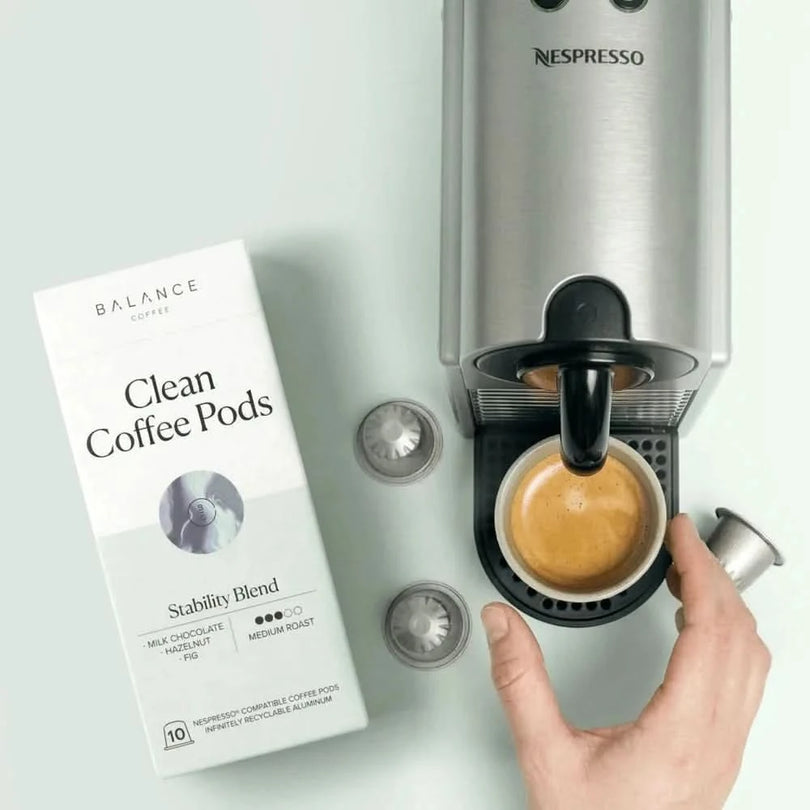
For this round of testing, I used Balance Coffee's Stability Blend, bought as whole beans. It is our own coffee, which I should state plainly.
The bag arrived two days after its roast date. That matters, because beans behave differently in the burrs as they degas.
Stability Blend is a medium roast of washed Mexican and Ugandan Arabica. The notes are milk chocolate, hazelnut and fig.
Dialling In for Espresso
I ground the beans on the Niche Zero at an espresso setting. It took a few adjustments on the stepless collar to get an even grind.
Once the grind ran evenly, I pulled 40g from a 20g dose. That dial-in process is where a stepless collar earns its keep.
With clicked grinders, you are stuck between two settings. Here I could land exactly where the coffee wanted to sit.
I have not quoted a dial number, because Niche Zeros are calibrated individually. The same number means different things on different units.
How I Pull a Double Shot
Here is the espresso recipe I ran on the Niche Zero. Your machine and basket may shift these slightly.
- Preheat the machine. A cold group head pulls a flat, under-extracted shot.
- Grind fine. Espresso needs a fine, powdery grind. On the Niche Zero, that sits at the low end of the dial.
- Measure the dose. I work to 20 grams for a double on the Niche Zero. That suits the 58mm basket the grind cup fits. Use a scale rather than guessing.
- Distribute and tamp. Level the grounds in the portafilter, then tamp firmly and evenly.
- Pull the shot. Lock in and start the extraction. I target 40g out in 25 to 30 seconds.
- Serve straight away. Espresso changes fast as it cools.
The grinder's job is step two. Get the grind wrong and no amount of tamping or timing will rescue the shot. For the full method, including ratios and other brew types, see our coffee brewing guides.
Brew Methods Used
I have run this grinder across espresso, V60 pour over and cafetiere. Espresso is the hardest test, because small grind changes shift extraction noticeably. Cafetiere sits at the other end, needing a much coarser setting.
Who Did the Testing?
I did, personally. I hold the SCA Coffee Skills Diploma and have trained baristas for over a decade. Balance Coffee does not sell the Niche Zero, and this review is not sponsored by Niche.
Features of the Niche Zero Grinder
These are the features that actually change how the Niche Zero grinder performs day to day. This Niche Zero coffee grinder review covers eleven of them.
1. Modern Design
The Niche Zero looks like a considered object rather than a kitchen appliance. The body is aluminium with real oak trim on the dial and lid.
You can choose black or white. Both suit a wide range of kitchens, which matters for something living permanently on a worktop.
2. Size and the No-Hopper Design
The Niche Zero has no bulk hopper. Instead, you pour single doses into a small funnel, then close the interlocking lid.
That keeps the footprint small at 122mm wide and 211mm deep. It stands 311mm tall, rising to 435mm with the lid upright. Check your under-cupboard clearance before you order.

3. Infinite Grind Adjustment
The grind collar is stepless, so there are no fixed clicks to work between. You can land on any setting across the whole range.
That range runs from espresso-fine through to coarse. Whether you want fine for espresso, or coarse for your coffee for cafetiere, the adjustment covers it.
The dial is also marked with common brew methods. Consequently, you can move roughly to the right zone, then fine-tune by taste.

4. Grind Consistency
Consistency is the reason people upgrade grinders at all. A more even grind extracts more evenly, which means less bitterness and less sourness in the same cup.
Cheaper home grinders tend to produce a wider spread of particle sizes. They also clump more, especially at espresso settings.

In daily use, the Niche Zero delivers noticeably fewer clumps than the entry-level grinders I have owned. Niche publishes a dose consistency figure of within +/- 0.2g, based on independent test data.
Here is what that consistency cannot fix: stale or poor-quality beans. Fresh, well-sourced beans do more for your cup than any grinder. Our guide to the best coffee beans for espresso UK covers what to look for.
5. Noise Level
Noise is a real problem with electric grinders in a shared home. Nobody wants to wake the house at 6 am for one espresso.
Niche publishes a figure of 72dB during grinding. For context, that is around the level of a domestic vacuum cleaner.
So it is not quiet in absolute terms. What the slow motor avoids is the high-pitched shriek of a fast grinder.
In my kitchen it has never woken anyone upstairs. Niche publishes the same 72dB figure for the Duo.
6. DC Motor
The Niche Zero uses a direct current motor running at low speed. Grind speed is roughly one gram per second. A 20g espresso dose takes around 20 seconds.
That is slower than many competitors, and deliberately so. Lower speed reduces both noise and heat build-up in the grounds.
The trade-off is patience. If you grind large filter doses often, you will notice the wait.
7. 63mm Conical Burrs
The burrs are 63mm conicals, sourced from Mazzer. That is a commercial-grade size, unusually large for a home grinder.
Larger burrs cut more coffee per rotation. As a result, the motor can run slower while still finishing a dose in reasonable time.
At roughly one gram per second, 25g takes about 25 seconds. A 50g filter dose takes closer to 50 seconds.
8. The Grind Cup
The Niche Zero ships with a metal grind cup that does three jobs. First, you weigh your beans in it on a scale.
Second, it catches the grounds coming out of the chute. Third, it inverts neatly into a 58mm portafilter basket for espresso.
That invert trick only works on 58mm machines. On a 54mm Sage, like the Barista Express or Barista Pro, you tip the grounds in instead.
There is no hopper, because single dosing does not need one. The interlocking lid keeps beans from jumping out mid-grind.

9. Safety Interlocking Lid
Beans "popcorning" out of an open funnel is a common single-dosing annoyance. The Niche Zero solves it with a lid that must be closed to run.
The lid acts as the safety interlock. Open it, and the grinder stops, which also protects fingers near the burrs.
10. Build Quality and Durability
The aluminium body, burrs and oak trim are all serviceable parts, not sealed plastic. Niche supplies a socket driver in the box for calibration and burr access.
Nothing on the Niche grinder is sealed away from servicing. The burrs are replaceable when they eventually dull. That matters at this price point.
Different beans also behave differently in the burrs. Our Robusta vs Arabica Coffee guide explains why.

11. Retention and Waste
Waste is a genuine issue across the coffee supply chain. Global coffee production creates over 23 million tons of waste a year.
That figure comes from sustainability researcher Gunter Pauli. Daily Coffee News published it in October 2018.
At the kitchen level, grinder retention is the waste you actually control. Beans left inside a grinder go stale and skew your next dose.
Niche describes the Zero as a straight-through design that leaves no grind behind. In practice, you get out very close to what you put in.
For the grounds you do produce, see our tips on recycling coffee grounds at home.
Is the Niche Zero Worth It?
What the Niche Zero Does Well
The workflow is the strongest argument for it. Weigh, pour, flick, done, with almost nothing left inside.
The stepless dial covers espresso through cafetiere on one machine. For a single-grinder household, that flexibility is the whole point.
Build quality and serviceability hold up too. Replaceable 63mm Mazzer burrs mean this is not a disposable appliance.
Where the Niche Zero Falls Short
The price is the obvious barrier. At £559, it costs more than many entry-level espresso machines.
Grind speed is slow at roughly one gram per second. A 50g filter dose takes around 50 seconds.
It is also mains powered and 4.1kg, so it is not portable. Niche does not publish independent particle-distribution data either.
How Much Does the Niche Zero Cost to Own?
The Niche Zero costs £559 including VAT, with free UK shipping. Niche lists it as available to ship within seven days.
Spread over five years of daily use, that is roughly £112 a year. On two coffees a day, it works out around 15p per cup.
Compare that to a single café flat white. The maths only works if you actually brew at home most days.
Who Should Buy the Niche Zero?
Buy it if you make espresso at home and want one grinder for everything. It suits people who brew daily and care about consistency.
It also suits small kitchens, given the compact footprint and lack of a bulk hopper. Single dosers who rotate between different beans will get the most from it.
Finally, buy it if you plan to keep the grinder for years. Serviceable parts make it a long-term purchase rather than a stopgap.
Who Should Look Elsewhere?
Skip it if you drink one coffee a day from a cafetiere. A good hand grinder will do that job for a fraction of the price.
Skip it if you need portability, or if you grind large batches quickly. The slow motor and mains power both work against you there.
On a tighter budget, start with our roundup of the best manual coffee grinders in the UK.
For other electric options, see our guide to the best coffee grinders for espresso UK.
Where to Buy the Niche Zero
Niche's Own Website
For Niche Zero grinder UK buyers, the simplest option is direct from Niche Coffee. It sells at nichecoffee.co.uk for £559 including VAT. Shipping within the UK is free, and stock ships within seven days.
When you buy Niche Zero direct, you choose your plug type and colour at checkout.
Warranty claims also go straight to the manufacturer.
Third-Party Stockists
Several UK and international speciality retailers also carry the Niche Zero. Prices and stock vary, so compare against the direct price before ordering.
Balance Coffee does not sell the Niche Zero. We have no affiliate arrangement with Niche, and this review earns us nothing if you buy one.
Is There a Niche Zero Discount Code?
Not one that I can point you to. Niche sells the Zero directly at a single fixed price of £559, with free UK shipping included.
I have not seen a standing public Niche Zero discount code on the official site. Balance Coffee has no affiliate or referral code for it either.
If a deal appears, it will show on Niche's own product page. Treat third-party sites promising codes with caution.
Niche Zero Pros and Cons
Pros
- Stepless dial covers espresso through cafetiere on one grinder
- 63mm Mazzer conical burrs, a commercial burr size at home scale, and replaceable
- Straight-through design leaves almost no grounds retained
- 72dB while grinding, with a slow motor that avoids a high-pitched shriek
- Compact at 122mm wide, with no bulk hopper taking up space
- Serviceable build with replaceable burrs and a supplied socket driver
Cons
- £559 including VAT, more than many entry-level espresso machines
- Grind speed of roughly one gram per second is slow for filter doses
- Mains powered and 4.1kg, so it is not portable
- Niche publishes no independent particle-distribution data for the burrs
- Lid upright height of 435mm may not clear low wall cupboards
Where To Buy Coffee Beans To Grind With Your Niche Zero Grinder
A grinder this capable deserves beans worth grinding. Plenty of UK roasters sell whole beans that would suit this machine.
I should be upfront here. Balance Coffee is my own company, so treat what follows as a pitch rather than a neutral recommendation.
What I can point to is the testing. Our coffee beans range was lab-tested by P.H. s.r.l. and TÜV SÜD in November 2024. It came back clear on pesticides, aflatoxins, OTA, mould and yeast, and heavy metals. OTA came back below the detection threshold, against an EU limit of 5 µg/kg.

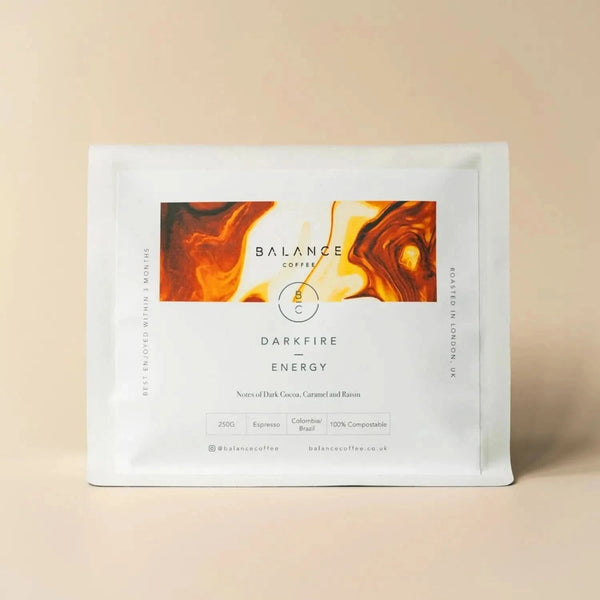
The Stability Blend is the coffee I ground for the espresso testing above. It is a medium roast at £14.99 for 250g, roasted to order and date-stamped.
Our speciality whole coffee beans also come as single origins. Try the Aurora Single Origin from Alta Mogiana, Brazil if you prefer a lighter cup.
Shop Speciality Coffee Beans →

People Also Ask (FAQ)
Here are some questions I have answered for you.
Is the Niche Zero worth the money?
Yes, if you brew espresso at home most days. At £559, it costs more than many entry-level machines. Spread over five years of daily use, that is roughly £112 a year, or 15p per cup. If you brew occasionally, a hand grinder makes far more sense.
Is the Niche Zero good for espresso?
Yes. The stepless dial goes fine enough for espresso. The 63mm Mazzer conical burrs are a commercial burr size. The grind cup inverts directly into a 58mm portafilter basket. Niche publishes dose consistency within +/- 0.2g, based on independent test data. The dial is also marked for espresso.
Does the Niche Zero really have zero retention?
Almost, but not literally zero. Niche describes it as a straight-through design that leaves no grind behind. In daily use you recover very close to the weight you put in. That matters because grounds left inside go stale and skew the flavour of your next dose.
How loud is the Niche Zero?
Niche publishes 72dB during grinding. That sits between normal conversation and a vacuum cleaner. That is around domestic vacuum cleaner level, so not quiet in absolute terms. The slow DC motor avoids the shriek of a fast grinder. Early morning use in a shared home is realistic. Niche publishes the same 72dB figure for the Duo.
How long does the Niche Zero take to grind a dose?
Roughly one gram per second, per Niche's published spec. A 20g espresso dose takes around 20 seconds. A 25g dose takes about 25 seconds. A 50g filter dose takes closer to 50 seconds, which is slow by modern standards. The low speed reduces noise and heat.
Does the Niche Zero fit under kitchen cupboards?
It stands 311mm tall with the lid closed. With the lid upright for filling, it reaches 435mm. Measure your under-cupboard clearance before ordering. The footprint itself is small at 122mm wide and 211mm deep. It weighs 4.1kg, and there is no bulk hopper adding height.
Niche Zero or Niche Duo?
Choose the Zero if you switch between espresso and filter. Its dial moves between the two in seconds, on one set of 63mm conical burrs. The Duo uses 83mm flat burrs in dedicated espresso and filter sets, swapped by hand. It starts at £649 against the Zero's £559.
Can you use the Niche Zero for cafetiere and filter?
Yes. The dial is marked for common brew methods and covers coarse settings comfortably. I have used it for V60 and cafetiere alongside espresso. The only drawback is speed, since a 50g filter dose takes around 50 seconds. Filter drinkers should factor that in.
When was this Niche Zero coffee grinder review last updated?
July 2026. I rechecked the price, specs, box contents and stock status against Niche's own site. The £559 price and the one gram per second grind speed are both current. Niche also lists it as shipping within seven days. Prices change, so confirm before ordering.
Conclusion
That is the honest summary of my Niche Zero coffee grinder review. It remains the single-dose grinder I recommend most often.
It grinds well across espresso and filter, and it retains almost nothing.
It is also built to be serviced rather than replaced. Its weaknesses are real too. It is slow, heavy, and at £559, a significant outlay.
Buy it if you brew daily and want one grinder to cover everything. Look at a hand grinder instead if you brew occasionally, or if £559 is out of reach.
Whichever grinder you land on, fresh beans matter more than the machine.
Not ready to buy yet? Our guide on how to grind coffee beans covers the alternatives.